


Last Updated: July 2026
DSCR Loans Raleigh, NC — Quick Answer
A DSCR loan in Raleigh, NC is an investment property mortgage that qualifies borrowers based on rental income instead of personal income. Most lenders require a DSCR of 1.0, but Defy allows as low as 0.75. Investors typically need 15–25% down, a 640+ credit score, and can close in 14–21 days. No W-2s or tax returns required.
Table of Contents
- What Is a DSCR Loan?
- Why Raleigh Works for DSCR Investors
- Raleigh DSCR Loan Requirements
- Raleigh Neighborhoods — Investment Strategies
- Who DSCR Loans Work Best For
- DSCR Calculation Example
- Pros and Cons
- Raleigh DSCR Loan Rates
- DSCR vs. Conventional
- Raleigh Rental Yields and DSCR Trends
- Frequently Asked Questions
A DSCR loan in Raleigh is an investment property mortgage that qualifies borrowers based on a property’s rental income rather than personal income, W-2s, or tax returns. DSCR loans are one of the most widely used financing tools for Raleigh real estate investors building rental portfolios without relying on personal income — qualifying on whether the property’s rent covers the mortgage payment, regardless of employment status or documentation.
✅ Key Takeaways
- DSCR loans qualify on rental income — no personal income required
- Defy minimum DSCR: 0.75
- Maximum LTV: 85% (purchase SFR)
- No maximum loan amount
- Closes in 14–21 days
- LLC borrowing permitted
- Research Triangle = highest-educated workforce in America — premium tenant quality
DSCR loans in Raleigh, NC — anchoring the Research Triangle metro area alongside Durham and Chapel Hill — have become the financing tool of choice for real estate investors targeting one of America’s fastest-growing and most economically resilient markets. Raleigh is now the third fastest-growing large city in the United States, welcoming an average of 66 new residents every single day, with more than $7 billion currently invested in new developments across the region. Defy Mortgage provides investment property loans in Raleigh, NC with a 0.75 minimum DSCR, up to 85% LTV, and closings in as little as 14–21 days.
Defy is built specifically for real estate investors — not traditional borrowers — which allows for faster underwriting, more flexible DSCR thresholds, and a streamlined process designed around rental income loans Raleigh investors need. No tax returns. No W-2s. No DTI calculations. Investors comparing Southeast and Research Triangle markets may also consider DSCR opportunities in Charlotte, Atlanta, or Dallas.
What Is a DSCR Loan?
New to the structure? The complete guide to DSCR loans covers the mechanics end to end — how coverage is calculated, what underwriting asks for, and where the product fits.
What is a DSCR loan in Raleigh, NC?
A DSCR loan in Raleigh, NC is a mortgage for investment properties that qualifies borrowers based on rental income instead of personal income. Lenders calculate DSCR by dividing rental income by total housing expenses (PITIA). Most Raleigh DSCR loans require a DSCR of 1.0, but Defy allows as low as 0.75.
DSCR Loan Raleigh — Simple Definition
A DSCR loan in Raleigh is a real estate investment loan where approval is based on rental income instead of personal income. Lenders compare the property’s rent to its monthly expenses (PITIA). If the rent covers the payment, the loan qualifies — no tax returns or W-2s needed.
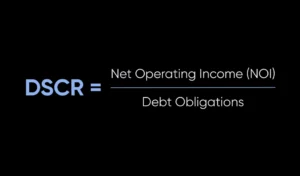
DSCR (Debt Service Coverage Ratio) measures whether a property’s rental income covers its mortgage payment. It is calculated by dividing monthly rental income by the total monthly housing expense (PITIA — principal, interest, taxes, insurance, and HOA).
Formula:
DSCR = Rental Income ÷ PITIA
- Rental Income = market rent from appraisal (Fannie Mae Form 1007) or 12-month rental history
- P = principal
- I = interest
- T = property taxes
- I = insurance
- A = HOA dues (if applicable)
A DSCR of 1.0 means the property exactly covers its mortgage payment. Above 1.0 means positive cash flow. Below 1.0 means the rent doesn’t fully cover the payment — Defy goes as low as 0.75.
Typically, yes — DSCR loans do not require personal income verification. Approval is based on the rental income of the property, not W-2s, tax returns, or personal DTI. Learn more about DSCR loan requirements →
What is a good DSCR ratio in Raleigh?
Generally, a DSCR of 1.0 or higher is considered strong. In Raleigh’s high-demand submarkets near RTP and NC State, many properties qualify comfortably above 1.0. Defy allows DSCR as low as 0.75 — giving Raleigh investors more flexibility than most lenders.
Why Raleigh Works for DSCR Investors
Raleigh is part of the Research Triangle region (Raleigh, Durham, Chapel Hill) — one of the most important technology and life sciences hubs in the United States, anchored by three Tier 1 research universities: NC State University, Duke University, and the University of North Carolina at Chapel Hill. Together, these institutions and the companies that cluster around them make the Triangle one of the most defensible long-term rental markets in the country.
Raleigh’s fundamentals make it one of the strongest markets for rental property financing Raleigh NC investors can access:
- Third fastest-growing large city in the US — 66 new residents per day, Wake County surpassing 1.2 million residents, population up nearly 10% since 2020
- Research Triangle Park (RTP) — 300+ companies including IBM, Cisco, Red Hat, and a rapidly expanding biotech sector expected to add over 50,000 new jobs by 2026 — driving consistent demand for high-quality professional rentals
- Highest-educated workforce in America — NC State University, Duke University, and UNC Chapel Hill within 20 miles of each other anchor a professional tenant pool unlike any other market in the Southeast
- $7 billion in active development — currently being invested across the Triangle region, signaling long-term confidence in the market
- Cap rates of 5–7% in established submarkets, with higher yields in emerging corridors like Wendell and Wake Forest
- 1–3% rent growth projected for 2026, with single-family rentals in high demand from families delaying homeownership due to elevated mortgage rates
- Landlord-friendly laws — North Carolina requires 10-day notice for nonpayment, no rent control, investor-favorable legal environment
- No Florida-style insurance crisis — NC insurance costs are manageable, making DSCR calculations cleaner than coastal Florida markets
Investors entering the Raleigh market in 2026 are still positioned ahead of the Triangle’s long-term tech and biotech expansion — the job creation pipeline through 2030 supports sustained rental demand and property appreciation.
Market data is approximate and subject to change based on current market conditions.
Most Raleigh DSCR scenarios receive initial pricing within 24 hours.
Get Your Raleigh DSCR Quote in 24 Hours →
Raleigh DSCR Loan Requirements at Defy
| Requirement | Defy Mortgage |
|---|---|
| Minimum DSCR | 0.75 |
| Maximum LTV (Purchase SFR) | 85% |
| Maximum LTV (Cash-Out Refi) | 80% |
| Minimum Credit Score | 640 |
| Maximum Loan Amount | No maximum |
| Income Documentation | None required |
| Tax Returns Required | No |
| W-2s Required | No |
| LLC Borrowing | Yes |
| Closing Timeline | 14–21 days |
Get Your Raleigh DSCR Quote in 24 Hours →
Raleigh Neighborhoods — DSCR Investment Strategies
The Research Triangle breaks into distinct investment strategies by submarket:
Tech and Professional Tenant Markets
Neighborhoods: North Hills (27609), Midtown Raleigh, Downtown Raleigh, Cary
Raleigh’s tech corridor attracts IBM, Cisco, Red Hat, and biotech professionals — among the highest-quality long-term tenants in any Southeast market. North Hills and Cary command premium rents from RTP commuters. Higher entry prices but low vacancy and strong appreciation.
University and Healthcare Rental Markets
Neighborhoods: NC State area (27606), Centennial Campus corridor, WakeMed/Rex Hospital area
NC State’s 36,000+ students and 8,000+ faculty create consistent rental demand year-round. Healthcare worker demand from WakeMed and Rex Hospital supports strong occupancy in surrounding neighborhoods. Reliable cash flow with professional and student tenant mix.
Cash Flow Focus — Emerging Suburbs
Neighborhoods: Wendell (27591), Wake Forest (27587), Knightsville, East Raleigh
Wendell’s population has grown over 70% in four years — median home prices around $426,000 with strong tenant demand from RTP workers priced out of central Raleigh. Wake Forest is seeing major healthcare and retail expansion. These submarkets offer the best DSCR ratios in the Triangle.
Suburban Family Rentals
Neighborhoods: Apex, Holly Springs, Fuquay-Varina, Garner, Clayton
High-rated school districts attracting professional families. Consistent demand from tech and biotech employees with families. Slightly higher entry prices than eastern suburbs but strong long-term appreciation and low vacancy.
Short-Term and Mid-Term Rentals
Downtown Raleigh and areas near PNC Arena, the Convention Center, and major event venues support STR strategies. Mid-term rentals (30-90 days) serve traveling healthcare workers and RTP contractors — a growing segment in the Triangle. Verify local STR regulations before purchasing.
Best DSCR Loan Scenarios in Raleigh
Scenario 1: Buying in Wendell or Wake Forest for Cash Flow
Entry prices around $426,000, newer construction, and strong family rental demand yield DSCRs consistently above 1.0. Best fit for investors who need the numbers to work from day one. RTP commuter demand keeps vacancy low.
Scenario 2: North Hills or Cary Appreciation Play
Premium tech and biotech professional tenants, low turnover, and strong long-term appreciation. DSCR ratios are tighter (often 0.95–1.05) but tenant quality is exceptional. Best fit for investors building equity over 7–10 years.
Scenario 3: Mid-Term Rental Near Research Triangle Park
RTP contractors, traveling healthcare workers, and biotech professionals on 30–90 day assignments create a high-demand mid-term rental segment most investors miss. Properties within 20 minutes of RTP qualify for DSCR financing using market rent appraisal data.
Who DSCR Loans Work Best For in Raleigh
Tech and biotech professional tenant investors — RTP’s 300+ companies generate a deep pool of well-qualified tenants willing to pay premium rents for quality housing near the park.
University market investors — NC State, Duke, and UNC Chapel Hill create consistent occupancy across the Triangle for investors comfortable with student and faculty tenants.
Emerging suburb investors in Wendell and Wake Forest — best DSCR ratios in the Triangle, newer construction, strong family rental demand, and more affordable entry prices than central Raleigh.
Out-of-state investors — no North Carolina residency required. Defy lends to investors nationwide purchasing Raleigh investment property financing.
Portfolio builders — no cap on number of financed properties. Scale Raleigh real estate investor financing without conventional DTI restrictions.
Self-employed and complex income investors — if the rental income covers the payment, you qualify. No tax returns needed.
LLC investors — borrow in your LLC name for asset protection and portfolio organization.
Who this is NOT for:
- Investors requiring immediate strong cash flow — central Raleigh is primarily an appreciation and quality-tenant market
- W-2 borrowers who qualify easily for conventional investment loans at lower rates
- Owner-occupants — DSCR loans are for investment properties only
- DSCR loans are not always the best option for every investor, especially those who qualify conventionally
DSCR Calculation Example — Raleigh Rental Property
Scenario: Single-family rental in Wendell, NC (emerging Raleigh suburb)
- Purchase price: $426,000
- Down payment (20%): $75,000
- Loan amount: $300,000
- Rate: Illustrative market rate, 30-year fixed
- Monthly P&I: $1,996
- Property taxes (est.): $313/month (~1.0% effective rate)
- Insurance (est.): $125/month
- Total PITIA: $2,434/month
- Market rent: $2,600/month
- DSCR = Rental Income ÷ PITIA = $2,600 ÷ $2,434 = 1.07 ✅
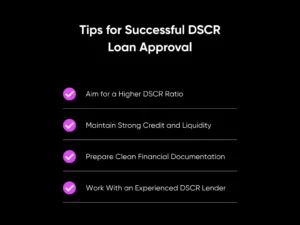
At 1.07 DSCR, this loan qualifies comfortably at Defy. No tax returns, no W-2s, no personal income verification needed.
Want us to run the numbers on your specific Raleigh deal?
See Your Raleigh Deal Numbers →
Raleigh sits inside a wider state program — see DSCR loans in North Carolina for statewide eligibility, licensing, and the other NC metros Defy lends in.
Pros and Cons of DSCR Loans in Raleigh
Pros:
- No personal income verification — qualify on rental income alone
- No tax returns or W-2s required
- No limit on number of financed properties
- LLC borrowing allowed for asset protection
- Fast closings — 14–21 days
- 0.75 minimum DSCR — more flexibility than most Raleigh lenders
- No maximum loan amount
- Raleigh’s professional tenant pool = lower vacancy and turnover vs. most markets
- No Florida-style insurance crisis — NC insurance costs are manageable
Cons:
- Rates typically slightly higher than conventional — though spread has narrowed significantly
- Central Raleigh is an appreciation market with moderate near-term cash flow
- Larger down payments typically required — 20–25% (Defy goes to 15% at 85% LTV for qualifying borrowers)
- North Carolina has a flat 4.5% state income tax — factor into your overall return calculation
- Investment properties only — not for primary residences
Raleigh DSCR Loan Rates
Defy doesn’t publish a single Raleigh number, because pricing moves with credit, leverage and property type. Start with today’s DSCR loan rates, then check DSCR loan rates by FICO tier to see where a 640, 680 or 720 file actually lands.
Raleigh DSCR Pricing Tiers
| Scenario | Pricing Tier |
|---|---|
| 740+ FICO, 75% LTV, DSCR ≥ 1.0 | Best pricing tier |
| 720 FICO, 80% LTV, DSCR ≥ 1.0 | Above-best tier |
| 680 FICO, 75% LTV, DSCR ≥ 1.0 | Higher tier |
| Any FICO, DSCR 0.75–0.99 | Rate premium applies |
⚠️ Rates change daily — these are matrix-based pricing tiers — your actual rate depends on your full scenario.
Under current market conditions, DSCR loan rates in Raleigh vary based on credit score, LTV, DSCR ratio, and property type. See current Non-QM rates → for a full breakdown by product and LTV tier.
The spread between DSCR rates and conventional investment property rates has narrowed significantly. For Raleigh investors who can’t document income conventionally, the rate difference is minimal — and the flexibility of rental property financing Raleigh investors need far outweighs it.
Factors that improve your Raleigh DSCR rate:
- Higher credit score (720+ preferred, 740+ for best pricing)
- Lower LTV (75% or below)
- Higher DSCR ratio (1.0+ for best terms)
- SFR vs. condo or multi-unit
See Today’s Raleigh DSCR Rates →
Are DSCR Loans Better Than Conventional Loans in Raleigh?
Yes — for investors scaling a portfolio. DSCR loans have no property count limits, require no personal income documentation, allow LLC ownership, and close in 14–21 days. For investors with multiple properties, complex income, or W-2 write-offs, DSCR financing is almost always the better path in Raleigh’s competitive market.
No — for W-2 borrowers with strong documented income. If you easily qualify conventionally and only need 1-2 investment properties, conventional financing typically offers lower rates. DSCR’s value is flexibility and speed, not rate.
DSCR Loans vs. Conventional Investment Property Loans
| Feature | DSCR Loan | Conventional | Best Choice |
|---|---|---|---|
| Income Verification | Rental income only | Personal income required | Investors → DSCR |
| DTI Consideration | Not used | Required | Self-employed → DSCR |
| Tax Returns | Not required | Required | Complex income → DSCR |
| Property Limit | No limit | Typically 6–10 | Portfolio builders → DSCR |
| LLC Borrowing | Yes | Rarely | Asset protection → DSCR |
| Closing Speed | 14–21 days | 30–45 days | Competitive deals → DSCR |
| Best For | Investors scaling | W-2 borrowers | Depends on income type |
Raleigh vs. Other DSCR Markets
| Market | Investment Profile | Typical DSCR | Key Advantage |
|---|---|---|---|
| Raleigh, NC | Appreciation + tenant quality | 1.0–1.15 | Highest-educated workforce, RTP tech anchor |
| Charlotte, NC | Balanced cash flow + appreciation | 1.0–1.10 | America’s 2nd financial center |
| Atlanta, GA | Higher cash flow potential | 1.05–1.20 | Diverse economy, workforce housing |
| Dallas, TX | Scale + inventory | 1.0–1.15 | #1 ranked market, no state income tax |
| Tampa, FL | Long-term appreciation | 0.95–1.10 | Gulf Coast, no state income tax |
Raleigh stands apart for tenant quality — the Research Triangle’s professional workforce means lower vacancy, lower turnover, and more creditworthy tenants than almost any other Southeast market.
DSCR Loans vs. Bank Statement Loans in Raleigh
| Feature | DSCR Loan | Bank Statement Loan |
|---|---|---|
| Best For | Rental property investors | Self-employed owner-occupants |
| Qualifies On | Property rental income | Personal or business bank deposits |
| Income Docs | None | 12–24 months bank statements |
| Property Types | Investment only | Primary, second home, or investment |
| Max LTV (Purchase) | 85% | 90% |
If you’re an investor buying a rental property in Raleigh, a DSCR loan is typically the cleaner path. If you’re self-employed buying a primary residence, a bank statement loan may be the better fit.
Property Types Eligible for Raleigh DSCR Loans
- Single-family rentals (SFR)
- 2-4 unit investment properties
- Condos (warrantable and non-warrantable)
- Townhomes and PUDs
- Short-term and mid-term rentals — verify local regulations
- LLC-titled properties
How to Get a DSCR Loan in Raleigh
- Submit your deal scenario — property address, estimated value, expected rent, credit score
- Receive your quote within 24 hours — initial rate and terms same day, no credit pull required for initial quote
- Complete appraisal and underwriting — 3–10 business days
- Close in 14–21 days — faster than any conventional investment property loan
No income documents to gather. No tax returns to source. No employer verifications. The property does the qualifying. For a broader overview of North Carolina DSCR lending, see our North Carolina DSCR loans guide →
Raleigh Rental Yields and DSCR Trends (2026)
The Research Triangle’s tech and biotech expansion is the defining driver of Raleigh DSCR investment in 2026:
- Average rents: $1,561–$1,888/month depending on submarket and property type — Raleigh median one-bedroom rose +3.2% year-over-year in 2025
- Vacancy rates: low across the Triangle, particularly in submarkets near RTP and universities
- Rent growth: 1–3% projected for single-family rentals in 2026 (Zillow); market stabilizing after 2024–2025 multifamily oversupply
- Cap rates: 5–7% in established areas; higher yields in emerging suburbs like Wendell and Wake Forest
- Cash-on-cash: 6–8% considered solid; 8%+ in specific value-add or emerging submarkets
- Median home values: approximately $426,000–$450,000 across the Triangle; Wendell entry around $426,000
- Typical DSCR range: 1.0–1.15 on entry-level deals in emerging suburbs; tighter in central Raleigh
Data compiled from local MLS trends, North Carolina rental market reports, and lender underwriting benchmarks (2026). Always underwrite to current market rents and verified tax assessments.
Common DSCR Mistakes Raleigh Investors Make
- Overlooking the multifamily oversupply effect — Durham saw -12.8% year-over-year rent declines in 2025 due to new apartment supply; single-family rentals held up better — know your asset type
- Underestimating NC state income tax — North Carolina has a flat 4.5% state income tax; factor this into your overall return calculation
- Not targeting emerging suburbs — central Raleigh entry prices often compress DSCR below 1.0; Wendell and Wake Forest offer better initial ratios
- Using gross rent without deducting vacancy — Raleigh’s multifamily market saw extended leasing timelines in 2025; underwrite single-family at 95% occupancy
- Missing mid-term rental opportunity — RTP contractors and traveling healthcare workers create strong 30-90 day rental demand largely missed by investors focused only on long-term or STR
What Raleigh DSCR Underwriters Actually Look At
Understanding what goes into DSCR underwriting helps you structure deals correctly before submitting:
- Appraisal rent vs. market rent — lenders use the lower of the lease agreement or the appraiser’s rent schedule (Fannie Mae Form 1007). Don’t assume your asking rent qualifies — get the appraisal first.
- Property condition — deferred maintenance can affect appraised value and rental income conclusions. Properties needing significant work may not qualify without a bridge loan first.
- Vacancy assumptions — Defy underwrites to actual market occupancy. In Raleigh’s single-family market, 95% occupancy is standard. Multifamily properties in oversupplied submarkets (like Durham) may see more conservative assumptions.
- STR restrictions — if you’re buying for short-term or mid-term rental use, confirm local zoning allows it before contracting. Some Raleigh neighborhoods and HOAs restrict non-long-term rentals.
- LLC structure — Defy allows DSCR loans in LLC names. Have your entity docs ready at submission.
Knowing these factors in advance saves time and prevents surprises at underwriting.
Frequently Asked Questions
Are DSCR loans common in Raleigh?
Yes. DSCR loans are among the most widely used tools for Raleigh real estate investors, particularly for tech and biotech professionals scaling portfolios in the Research Triangle without conventional income documentation.
What is a DSCR loan in Raleigh, NC?
A DSCR loan in Raleigh, NC qualifies investors based on a property’s rental income rather than personal income. If the property’s rent covers the mortgage payment, you can qualify without W-2s or tax returns.
What DSCR is needed to qualify for a Raleigh DSCR loan?
Defy requires a minimum DSCR of 0.75. Most lenders require 1.0 or higher. Raleigh’s professional tenant demand supports strong DSCRs in well-located properties — particularly in emerging suburbs.
What credit score is needed for a DSCR loan in Raleigh?
Defy requires a minimum 640 FICO. Better pricing unlocks at 720+ and best rates at 740+.
How much down payment is required for a DSCR loan in Raleigh?
Most Raleigh DSCR loans require 20–25% down. Defy offers up to 85% LTV (15% down) for qualifying borrowers with 740+ FICO and DSCR ≥ 1.0.
Are DSCR loans worth it in Raleigh?
Yes for investors with a 5–10 year hold strategy. Raleigh’s Research Triangle is one of the most defensible long-term rental markets in the Southeast — driven by tech and biotech job creation that isn’t going away.
Can I use a DSCR loan for a mid-term rental in Raleigh?
Yes. Defy offers DSCR loans for mid-term and short-term rental properties using market rent appraisal data. The Triangle’s RTP contractor and traveling healthcare worker population supports strong mid-term rental demand.
Can I refinance into a DSCR loan in Raleigh?
Yes. Defy offers both rate-and-term and cash-out DSCR refinances in Raleigh up to 80% LTV. See our Non-QM cash-out refinance → page.
How fast can Defy close a Raleigh DSCR loan?
Typically 14–21 days from completed application.
Does Defy lend throughout the Research Triangle?
Yes — including Durham, Chapel Hill, Cary, Apex, Holly Springs, Wendell, Wake Forest, Fuquay-Varina, and all surrounding areas.
Why do some Raleigh DSCR loans fail to qualify?
The most common reasons: (1) appraiser rent comes in below the investor’s assumed rent, reducing DSCR below threshold; (2) actual insurance quotes are higher than estimated; (3) property condition issues flagged during appraisal; (4) credit score below 640. Running accurate numbers before contracting — including a real insurance quote and conservative rent assumption — prevents most of these issues.
Is there a maximum loan amount for Raleigh DSCR loans?
No. Defy has no maximum loan amount on DTC DSCR loans.
Written by Ashley Heesch, Head of Marketing at Defy Mortgage. Ashley brings 8 years of marketing experience to making non-QM lending accessible and clear for investors and self-employed borrowers.
Defy Mortgage specializes exclusively in Non-QM lending for real estate investors and self-employed borrowers nationwide — trusted by investors scaling rental portfolios across the U.S.
Ready to finance your next Raleigh investment property? Get your Raleigh DSCR quote in 24 hours. Close in as little as 14 days. No credit pull required for your initial quote. Active lending across 30+ states.
📞 (615) 622-1032
Get Your Raleigh DSCR Quote in 24 Hours →
Licensing
North Carolina is DSCR-eligible with Defy, part of our 38-state DSCR lending footprint for business-purpose investment property loans. See the full list on our state licensing page.

