


DSCR Loans Seattle: Investment Property Financing in the Pacific Northwest Tech Capital
Last Updated: April 2026
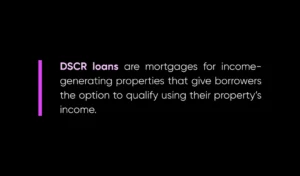
What is a DSCR loan in Seattle? A DSCR loan in Seattle, WA — also called a rental property loan or no-income mortgage — qualifies real estate investors using property cash flow instead of personal income. These loans are commonly used to finance long-term rentals, mid-term corporate housing, and STR properties across Seattle and Tacoma. Defy: 0.75 minimum DSCR, 85% LTV, closes in 14–21 days. No Washington state income tax.
Seattle DSCR Loan Snapshot — April 2026
- Minimum DSCR: 0.75
- Maximum LTV: 85% (SFR purchase)
- Minimum FICO: 640
- Seattle metro median home value: ~$819,000
- Suburban entry prices (Tacoma, Renton, Kent, Burien): $380,000–$550,000
- Average Seattle metro rent: $2,500–$3,600/month (2BR)
- Mid-term furnished rental premium: 30–50% above long-term market rent
- Typical Seattle DSCR ratio: 1.02–1.15 (tight but consistent)
- Property tax effective rate: ~0.85–1.10% (moderate — lower than Texas)
- Washington state income tax: None
- Closing timeline: 14–21 days
- No income documentation required
- LLC borrowing: Yes
Key Takeaways
- DSCR loans qualify on rental income — no personal income required
- Defy minimum DSCR: 0.75
- Up to 85% LTV on SFR purchases
- No tax returns or W-2s required
- No maximum loan amount
- Closes in 14–21 days
- Amazon employs ~50,000+ people across the Seattle metro — one of the largest single corporate tenant demand engines in the cluster
- Mid-term corporate housing for tech workers is Seattle’s unique DSCR angle — 30–50% premium over long-term market rent
- Tacoma is the suburban relief valve — ~30–45 minutes south depending on traffic, entry prices $380K–$550K, strong cash flow
- Seattle DSCR ratios are tight (1.02–1.15) — Defy’s 0.75 minimum gives investors flexibility other lenders won’t
A DSCR loan in Seattle is an investment property mortgage that qualifies borrowers based on the property’s rental income rather than personal income, W-2s, or tax returns. Seattle has the highest-income tech tenant base of any market in the Defy DSCR cluster — Amazon, Microsoft, and Boeing workers earning $120,000–$300,000+ annually. The unique opportunity: mid-term corporate housing for tech professionals on rotation, relocation, or project assignments generates 30–50% premium over standard long-term rents, creating DSCR ratios that work despite Seattle’s high entry prices.
Table of Contents
- What Is a DSCR Loan in Seattle?
- Seattle’s Unique DSCR Angle — Mid-Term Corporate Housing
- Seattle DSCR Loan Requirements
- Seattle and Tacoma Neighborhoods for DSCR Investment
- DSCR Calculation Example
- The Seattle Economy — Amazon, Microsoft, Boeing
- Tacoma — Seattle’s Suburban Cash Flow Alternative
- Who DSCR Loans Work Best For
- Pros and Cons
- Seattle DSCR Loan Rates
- DSCR vs. Conventional
- Seattle vs. Other Markets
- Is Seattle Better for DSCR Than Other Markets?
- What DSCR Deals Are Actually Closing in Seattle Right Now
- Frequently Asked Questions
DSCR Loans Seattle, WA — Quick Answer
A DSCR loan in Seattle, WA qualifies based on rental income — not W-2s or tax returns. Seattle is the only major market in the Defy cluster where mid-term corporate housing for tech professionals generates 30–50% rental premium over standard market rent. Amazon employs 50,000+ people in South Lake Union alone. Washington has no state income tax. Defy: 0.75 minimum DSCR, 85% LTV, closes in 14–21 days.
The unlock for Seattle DSCR investing is mid-term corporate housing — and it changes everything about how the math works. DSCR loans in Seattle, Washington serve the highest-income tenant base in the Defy city cluster. Amazon’s ~50,000+ South Lake Union employees, Microsoft’s Redmond campus, and Boeing’s aerospace workforce create a pool of tech and engineering professionals earning $120,000–$300,000+ annually — tenants who pay on time, maintain properties well, and stay for years. The unique DSCR angle no competitor page addresses: mid-term corporate housing. Amazon, Microsoft, and Boeing workers on rotations, relocations, and project assignments need furnished, high-quality rentals for 1–6 months. These rentals command 30–50% premium over long-term market rent — and with 12 months of verified income history, Defy can underwrite using that income. Defy Mortgage specializes in DSCR financing for Seattle investors — including mid-term corporate housing, long-term suburban rentals, and STR-eligible properties across the metro. Seattle investment property loans, rental property financing Seattle WA, no-income mortgage Seattle options — all at 0.75 minimum DSCR, 85% LTV, 14–21 day closings. 0.75 minimum DSCR, up to 85% LTV, no tax returns, closes in 14–21 days. Washington has no state income tax.
Here’s the reality most Seattle investors learn too late:
- $750K Seattle deal on long-term rent = 0.63 DSCR ❌
- Same deal with verified corporate housing income = 0.90 DSCR ✅
- Tacoma suburban SFR = 0.85 DSCR ✅
Most Seattle DSCR deals do not work on long-term rent alone. The corporate housing premium is the unlock — or Tacoma is the alternative.
See If Your Seattle Deal Clears 0.75 DSCR — No Credit Pull →
Defy Mortgage originates DSCR loans nationwide and actively lends in Washington, including Seattle, the Eastside (Bellevue, Redmond, Kirkland), and the South Sound (Tacoma, Renton, Kent) across King, Pierce, and Snohomish counties. Our underwriting team evaluates rental income, property taxes, and DSCR thresholds daily across hundreds of investor scenarios — giving us real-world visibility into what deals are actually closing in Seattle right now.
Seattle investors considering other markets may also want to review Denver DSCR loans, Nashville DSCR loans, and Dallas DSCR loans. For a complete overview of DSCR loans, see our guide.
What Is a DSCR Loan in Seattle?
Formula (what is a DSCR loan →):
DSCR = Rental Income ÷ PITIA
- Rental Income = market rent from appraisal (Form 1007), 12-month rental history, or verified mid-term/corporate housing income
- PITIA = principal + interest + property taxes + insurance + HOA dues
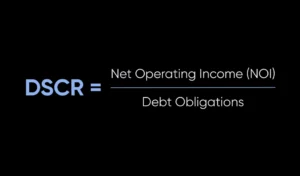
In plain terms: if rent covers the full monthly payment, your DSCR is above 1.0 — and the deal qualifies more easily. Seattle’s high entry prices mean the margin is tight, but the high-income tenant base and premium mid-term rental rates make the math work in ways other markets can’t replicate.
Seattle-specific context: Property taxes in King County run ~0.85–1.10% effective rate — moderate compared to Texas markets (1.8–2.1%) and a meaningful PITIA advantage over Houston or Austin. Washington has no state income tax, which improves cash-on-cash return relative to Colorado (4.4% flat) and most other states.
Use our DSCR loan calculator → to run your Seattle scenario.
Seattle’s Unique DSCR Angle — Mid-Term Corporate Housing
This is the angle that separates Seattle from every other city in the Defy DSCR cluster.
What is mid-term corporate housing? Furnished rentals for 1–6 months serving tech professionals, corporate relocatees, and project-based workers. Amazon, Microsoft, and Boeing routinely place employees in temporary housing during relocations, project rotations, and onboarding periods. These workers need high-quality, fully furnished properties close to their offices — and they (or their employers) pay a significant premium for it.
The premium: Mid-term corporate housing in Seattle commands 30–50% above standard long-term market rent. A property renting long-term at $3,000/month may achieve $4,000–$4,500/month as a furnished corporate rental. That uplift can be the difference between a deal that barely qualifies at 1.0x DSCR and one that comfortably clears 1.25x.
The DSCR basis: For properties with 12+ months of verified mid-term rental income history, Defy can underwrite using that income. Without that history, Defy underwrites to long-term market rent from the appraisal. The deal must work on standard market rent — the corporate housing premium is upside.
Best submarkets for corporate housing:
- South Lake Union / Denny Triangle — Amazon HQ proximity. Walking distance to Amazon’s campus. Highest demand for corporate housing in Seattle.
- Bellevue / Redmond (Eastside) — Microsoft campus proximity. Companies like Google, Meta, and T-Mobile also have Eastside offices.
- Capitol Hill / First Hill — Healthcare professional demand from Swedish, Virginia Mason, and UW Medicine. Walkable, transit-connected.
- Fremont / Ballard — Mid-level tech and creative professionals. Slightly lower rents but strong demand.
If you want to see if your Seattle deal qualifies using corporate housing income, you can run it through Defy’s underwriting in under 24 hours — get your quote here →.
The contrarian insight: Most investors assume you need high rents to make Seattle DSCR work. The smarter play is using the corporate housing premium to unlock DSCR ratios that standard long-term rent alone can’t achieve — then maintaining the asset to retain corporate housing clients who stay 3–6 months and leave the property in excellent condition.
Seattle DSCR Loan Requirements at Defy
| Requirement | Defy Mortgage |
|---|---|
| Minimum DSCR | 0.75 |
| Maximum LTV (Purchase SFR) | 85% |
| Maximum LTV (Cash-Out Refi) | 80% |
| Minimum Credit Score | 640 |
| Maximum Loan Amount | No maximum |
| Income Documentation | None required |
| Tax Returns Required | No |
| W-2s Required | No |
| LLC Borrowing | Yes |
| Closing Timeline | 14–21 days |
| Mid-Term/Corporate Housing Eligible | Yes — with 12-month income history |
| STR Eligible | Yes — in compliant zones |
Run Your Seattle Deal Through Defy (24hr Underwrite) →
Seattle and Eastside Neighborhoods for DSCR Investment
Premium Tech Tenant Markets
South Lake Union (Amazon Corridor)
Amazon’s global headquarters. 50,000+ employees within walking distance. Highest corporate housing demand in Seattle. Condos and apartments command $3,000–$4,500/month. Entry prices $600,000–$1,100,000+. DSCR tight on long-term rent but strong on corporate housing income. Best fit: investors with furnished corporate housing strategy.
Bellevue / Redmond (Microsoft Eastside Corridor)
Microsoft campus (Redmond), plus Google, Meta, T-Mobile, and hundreds of tech companies. Premium suburban living for tech workers who prefer Eastside lifestyle. Entry prices $800,000–$1,400,000+. Rents $3,200–$5,000/month for corporate-quality SFR. Best fit: high-value SFR investors targeting corporate tenants.
Capitol Hill
Seattle’s most culturally active urban neighborhood. Strong demand from tech workers wanting urban lifestyle, healthcare workers from First Hill medical cluster, and young professionals. Entry prices $600,000–$1,100,000. Rents $2,500–$3,600/month. DSCR 1.02–1.12. Best fit: appreciation + solid long-term tenant demand.
Fremont / Ballard (northwest Seattle)
Creative tech and mid-level professional tenants. More accessible entry prices ($550,000–$850,000). Rents $2,200–$3,000/month. Walkable, transit-connected. Best fit: investors wanting urban exposure at lower entry than Capitol Hill or South Lake Union.
Suburban Cash Flow Markets
Beacon Hill / Rainier Valley (south Seattle)
Emerging neighborhood with strong investment activity. More accessible entry ($450,000–$650,000). Diverse tenant base, proximity to light rail. Improving infrastructure. Best fit: appreciation-focused investors comfortable with transitional market.
Renton / Kent (southeast King County)
Boeing’s major manufacturing presence. Aerospace and logistics worker tenant base. Entry prices $450,000–$600,000. Rents $2,200–$2,800/month. Stronger DSCR ratios than core Seattle. Best fit: workforce rental investors.
DSCR Calculation Example — Seattle Rental Property
Scenario 1: Core Seattle — Long-term rental (Capitol Hill)
- Purchase price: $750,000
- Down payment (20%): $150,000
- Loan amount: $600,000
- Rate: Illustrative market rate, 30-year fixed
- Monthly P&I: $3,992
- Property taxes (est.): $562/month (~0.90% King County)
- Insurance (est.): $150/month
- HOA: $400/month (condo/townhome — common in Seattle)
- Total PITIA: $5,104/month
- Long-term market rent: $3,200/month
- DSCR = $3,200 ÷ $5,104 = 0.63x ❌ (does not qualify on long-term rent alone)
Scenario 2: Same property — Corporate housing (12-month verified history)
- Corporate housing income: $4,600/month (verified)
- DSCR = $4,600 ÷ $5,104 = 0.90x ✅ (qualifies at Defy’s 0.75 minimum)
This is the Seattle DSCR equation in practice. Without HOA and on the right property, long-term rent can qualify. But in many Seattle scenarios, corporate housing income is the unlock.
Scenario 3: Tacoma suburban SFR — Long-term rental (no HOA)
- Purchase price: $480,000
- Down payment (20%): $96,000
- Loan amount: $384,000
- Rate: Illustrative market rate, 30-year fixed
- Monthly P&I: $2,556
- Property taxes: $400/month (~1.0% Pierce County)
- Insurance: $120/month
- HOA: $0
- Total PITIA: $3,076/month
- Market rent: $2,600/month
- DSCR = $2,600 ÷ $3,076 = 0.85x ✅
Tacoma is where standard long-term rental DSCR works cleanly. Lower entry price, lower HOA, strong rental demand from Seattle commuters.
DSCR Sensitivity — HOA Impact (Seattle $750K property, $3,200 rent)
| HOA/Month | Total PITIA | DSCR |
|---|---|---|
| $0 (SFR) | $4,704 | 0.68x |
| $200 | $4,904 | 0.65x |
| $400 | $5,104 | 0.63x |
| $600 | $5,304 | 0.60x |
HOA fees are the single biggest DSCR killer in Seattle’s condo-heavy market. Always include actual HOA in PITIA before underwriting any Seattle property.
Example: Recently Closed Seattle DSCR Loan
- Location: Capitol Hill, Seattle
- Property type: 2BR condo
- Purchase price: $720,000
- Rent (verified corporate housing, 12-month history): $4,400/month
- DSCR: 0.88x ✅
- LTV: 80%
- Tenant: Amazon engineer on 6-month project rotation
This deal did not qualify on long-term market rent alone ($3,100/month = 0.66x DSCR). Corporate housing income was the unlock.
Run Your Seattle Deal Numbers →
The Seattle Economy — Amazon, Microsoft, Boeing
Seattle’s economy is anchored by three employers that collectively define the highest-income renter profile in the cluster:
Amazon — Global headquarters in South Lake Union. 50,000+ direct Seattle employees. AWS, logistics, operations, and tech roles earning $120,000–$300,000+. Corporate relocation program constantly placing new hires and rotating employees into temporary housing.
Microsoft Corporation — Redmond headquarters (Eastside), 30 minutes from Seattle. 50,000+ employees in the greater Seattle metro. Premium Eastside housing demand. The defining economic force for Bellevue, Redmond, and Kirkland rental markets.
Boeing — Renton, Everett, and the South Sound. Aerospace engineering and manufacturing workforce. More moderate income ($80,000–$130,000) than tech but stable, long-term tenant profile. Key demand driver for Renton, Kent, and Tacoma suburban markets.
Supporting tech ecosystem: Google (Kirkland/Bellevue), Meta, T-Mobile, Expedia, Zillow, and hundreds of Amazon and Microsoft vendor companies all maintain significant Seattle metro operations. The tech ecosystem extends well beyond the anchor employers.
The result: Seattle has the deepest concentration of $150,000+ income renters of any market in the Defy cluster. These are not workforce renters — they are professionals who choose to rent because Seattle’s $819,000 median home price makes ownership a deliberate financial decision, not a default.
Tacoma — Seattle’s Suburban Cash Flow Alternative
Tacoma deserves its own section because it solves Seattle’s core DSCR problem directly.
The case for Tacoma:
- Entry prices $380,000–$550,000 vs. Seattle’s $819,000 median
- Rents $1,900–$2,800/month — strong relative to entry prices
- ~30–45 minutes to Seattle via I-5 depending on traffic — within commuting range of Amazon and Boeing
- Pierce County property taxes ~1.0% effective — slightly higher than King County but entry price makes it manageable
- No HOA on most SFR inventory — avoids Seattle’s biggest DSCR compression factor
DSCR profile: Tacoma suburban SFR regularly produces DSCR ratios of 0.85–1.10x on long-term market rent — the cleanest cash flow profile in the Seattle metro.
Tenant base: A mix of Boeing workers (Renton/Tacoma plants), healthcare workers (MultiCare Health System, CHI Franciscan), Joint Base Lewis-McChord military personnel, and Seattle commuters priced out of King County.
Best Tacoma submarkets: North Tacoma, Proctor District, Ruston, and newer construction in the Federal Way/Auburn corridor for maximum rental demand.
Investor insight: Many Seattle-area investors use a barbell strategy — one corporate housing property in South Lake Union or Capitol Hill for premium yield, one or two Tacoma suburban SFRs for stable cash flow. Defy underwrites both.
Common Seattle DSCR Deal Killers
- HOA fees not included in PITIA — Seattle’s condo-heavy market means $400–$800/month HOA is common. Always include actual HOA before underwriting.
- Underwriting to corporate housing income without history — Defy requires 12 months of verified mid-term rental income. Without it, Defy underwrites to long-term market rent only.
- Buying in core Seattle at $800K+ expecting standard rent to qualify — at this price point, long-term rent alone often falls short of 0.75x DSCR. The corporate housing premium or Tacoma is the answer.
- Overlooking Eastside condos with heavy HOA — Bellevue and Redmond condos near Microsoft campus often carry $500–$900/month HOA that eliminates DSCR viability.
- Assuming Washington STR regulations are permissive — Seattle has an STR licensing requirement and owner-occupancy requirements in some zones. Verify before contracting.
Who DSCR Loans Work Best For in Seattle
Corporate housing investors — furnishing and managing properties for Amazon, Microsoft, and Boeing workers on rotation. 30–50% premium over market rent, excellent tenant quality, and 12-month income history unlocks full mid-term income for DSCR qualification.
Tacoma suburban investors — clean cash flow, no HOA compression, entry prices that work on standard long-term rent. Best DSCR ratios in the metro.
Portfolio builders — no limit on financed properties. Seattle’s appreciation history and structural supply shortage support long-term holds.
Self-employed tech investors — Seattle has one of the highest concentrations of self-employed tech contractors in the country. DSCR ignores tax returns entirely.
Out-of-state investors — significant capital flows into Seattle from California and New York. DSCR enables financing without establishing Washington employment documentation.
LLC investors — borrow in your LLC for asset protection.
Who this is NOT for:
- Investors expecting Houston-style DSCR ratios in core Seattle — entry prices don’t support it without corporate housing income
- Buyers assuming corporate housing income qualifies without 12 months of verified history
- W-2 borrowers who qualify easily for conventional loans
Pros and Cons of DSCR Loans in Seattle
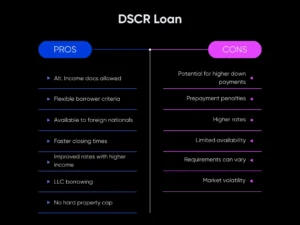
Pros
- No personal income verification
- No tax returns or W-2s required
- No Washington state income tax — improves cash-on-cash return
- Highest-income tech tenant base in the cluster — Amazon, Microsoft, Boeing
- Mid-term corporate housing premium (30–50%) unlocks DSCR ratios that standard rent can’t
- Moderate property taxes (~0.90%) vs. Texas markets
- Tacoma alternative — suburban cash flow at accessible entry prices
- No limit on financed properties
- LLC borrowing allowed
- 14–21 day closings
Cons
- Core Seattle entry prices ($819K median) compress DSCR on standard long-term rent
- HOA fees in Seattle condos ($400–$800/month) are the biggest DSCR killer
- Corporate housing income requires 12 months of verified history
- Tight DSCR ratios (1.02–1.15) in core Seattle — less margin than Houston or Tacoma
- Rates above conventional investment loan rates
- Seattle STR regulations require owner-occupancy in some zones — verify before contracting
Seattle DSCR Loan Rates
Defy doesn’t publish a single Seattle number, because pricing moves with credit, leverage and property type. Start with today’s DSCR loan rates, then check DSCR loan rates by FICO tier to see where a 640, 680 or 720 file actually lands.
Licensing
Washington is DSCR-eligible with Defy, part of our 38-state DSCR lending footprint for business-purpose investment property loans. For statewide detail see our Washington DSCR loan guide, or view the full list on our state licensing page.
Seattle DSCR Rate Scenarios by FICO Tier
| Scenario | Pricing |
|---|---|
| 740+ FICO, 75% LTV, DSCR ≥ 1.0 | ~Matrix-priced |
| 720 FICO, 80% LTV, DSCR ≥ 1.0 | ~Matrix-priced |
| 680 FICO, 75% LTV, DSCR ≥ 1.0 | ~Matrix-priced |
| Any scenario, DSCR 0.75–0.99 | Rate premium applies |
⚠️ Rates change daily — these are approximate indications for April 2026 only.
See current Non-QM rates → for full breakdown.
See Today’s Seattle DSCR Rates →
DSCR Loans vs. Conventional Investment Property Loans
| Feature | DSCR Loan | Conventional | Best Choice |
|---|---|---|---|
| Income Verification | Rental income only | Personal income required | Investors → DSCR |
| DTI Consideration | Not used | Required | Self-employed → DSCR |
| Tax Returns | Not required | Required | Complex income → DSCR |
| Property Limit | No limit | Typically 6–10 | Portfolio builders → DSCR |
| LLC Borrowing | Yes | Rarely | Asset protection → DSCR |
| Closing Speed | 14–21 days | 30–45 days | Competitive deals → DSCR |
Seattle vs. Other Markets
| Market | Unique Angle | No State Income Tax | Entry Price | DSCR Profile |
|---|---|---|---|---|
| Seattle, WA | Corporate housing premium, highest-income tenants | ✅ Yes | $819K/ $480K (Tacoma) | 1.02–1.15 (tight) |
| Houston, TX | Cash flow capital | ✅ Yes | $261K–$340K | 1.15–1.30 (strong) |
| Denver, CO | Dual-market STR + suburban | ❌ 4.4% | $380K–$500K | 0.80–0.95 |
| Austin, TX | Tech correction play | ✅ Yes | ~$499K | 0.75–0.90 |
| Nashville, TN | Music city appreciation | ❌ | $380K–$500K | 0.85–1.0 |
| Dallas, TX | Corporate relocation | ✅ Yes | $350K–$500K | 0.90–1.10 |
Is Seattle Better for DSCR Than Other Markets?
Seattle is better for:
- Investors who can execute a corporate housing strategy — no other market in the cluster offers the tech worker concentration and premium rents that make this work
- Highest-income tenants — Amazon/Microsoft workers are the most creditworthy tenant base in the cluster
- No state income tax — same advantage as Texas
- Long-term appreciation — structural housing supply shortage and continued tech employment growth
Seattle is worse for:
- Standard long-term rental cash flow in core Seattle — entry prices compress DSCR below 0.75x on many scenarios without corporate housing premium
- HOA-heavy condo buildings — kills DSCR; stick to SFR or low-HOA buildings
- Investors who want Houston-style ratios — that’s Tacoma, not Seattle proper
Bottom line: Seattle rewards the sophisticated investor who understands the corporate housing play. The investor who treats Seattle like a standard long-term rental market will struggle with DSCR. The investor who furnishes for tech workers and targets corporate housing clients can achieve premium yields that no other market in the cluster replicates.
What DSCR Deals Are Actually Closing in Seattle Right Now
Based on live Defy underwriting data across active Seattle and Tacoma DSCR loan files in the last 30–60 days — representing multiple active scenarios across King and Pierce counties. These are real underwriting observations — not projections.
- DSCR range: Corporate housing deals closing at 0.85–1.10x with verified income history; standard long-term rental deals most viable in Tacoma and South King County at 0.80–1.0x
- LTV: 75–80% most common — 85% LTV available for 740+ FICO
- Property types: SFR and small multifamily strongest; condos require careful HOA analysis
- Best-performing submarkets: Tacoma and Renton for clean long-term rental DSCR; South Lake Union and Capitol Hill for corporate housing with history
- Toughest scenarios: Eastside condos with $600–$900/month HOA — often non-viable regardless of rent level
- Recent trend (last 30–60 days): Tacoma inventory up, days on market increasing — creating better negotiating position for DSCR investors
These are real underwriting observations — not projections.
Why Investors Trust Defy for Seattle DSCR Loans
- Direct lender — no broker middleman
- 0.75 minimum DSCR — critical in Seattle where core deals often run 0.80–0.90x
- Mid-term corporate housing eligible — Defy underwrites verified corporate housing income for qualifying scenarios
- Non-QM specialists — DSCR is Defy’s core product
- 14–21 day closings
- No loan maximum — scales from $480K Tacoma SFR to $1.2M+ South Lake Union property
- Licensed across 30+ states including Washington
- Underwrites both Seattle corporate housing and Tacoma suburban SFR scenarios daily
Defy Mortgage is a direct Non-QM lender founded in 2023 and headquartered in Nashville, TN.
Frequently Asked Questions
Can You Get a DSCR Loan in Seattle With a DSCR Below 1.0?
Yes — Defy’s minimum is 0.75. Most Seattle deals close between 0.80 and 1.10x. A DSCR below 1.0 means the property doesn’t fully cover its payment on paper, but Defy underwrites to the investor’s full profile including credit, LTV, and reserves. Many of the best Seattle investments close at 0.85–0.95x.
Do Seattle DSCR Loans Work for Airbnb Properties?
Yes, in compliant zones with proper licensing. Seattle requires STR licensing and has owner-occupancy rules in some zones — verify at the specific address. Defy underwrites STR properties to long-term market rent without 12 months of STR history. With 12 months of verified STR income, that income can be used for qualification.
What DSCR Do You Need in Seattle vs. Other Cities?
Defy requires 0.75 minimum everywhere. In practice, Seattle deals close at 0.80–1.15x — tighter than Houston (1.15–1.30x) but comparable to Denver suburbs and Austin. The key difference: Seattle’s corporate housing premium is the tool that moves deals from non-qualifying to qualifying without changing the entry price.
What is a DSCR loan in Seattle, WA?
A DSCR loan in Seattle — also called a no-income investment property loan — qualifies based on rental income rather than personal income. Available for standard long-term rentals, mid-term corporate housing with 12 months verified history, and STR-compliant properties.
Why are DSCR ratios tight in Seattle?
Seattle’s high entry prices ($819K median) mean loan amounts and PITIA are high relative to market rent. Most core Seattle deals produce DSCR of 1.02–1.15 on long-term rent. HOA fees in condos further compress ratios. Defy’s 0.75 minimum gives investors room other lenders won’t provide.
Can I use corporate housing or mid-term rental income for DSCR qualification in Seattle?
Yes — with 12 months of verified mid-term rental income history. Defy can underwrite using corporate housing income for qualifying scenarios. Without 12 months of history, Defy underwrites to long-term market rent from the appraisal.
Does Washington have state income tax?
No — Washington has no state income tax, which improves cash-on-cash return relative to states like Colorado (4.4% flat) and most other states. This is a meaningful advantage alongside Texas as the only other major Defy cluster market with no state income tax.
What are the best submarkets for DSCR in Seattle?
For corporate housing: South Lake Union, Capitol Hill, Bellevue/Redmond Eastside. For standard long-term rental DSCR: Tacoma, Renton, and South King County. For value-add appreciation: Beacon Hill, Rainier Valley.
What is the minimum credit score for a Seattle DSCR loan?
640 minimum FICO at Defy. 720+ unlocks best rates and highest LTV.
What is the biggest DSCR deal killer in Seattle?
HOA fees. Seattle’s condo-heavy market means $400–$800/month HOA is common, which adds directly to PITIA and frequently pushes deals below 0.75x DSCR. Always get the actual HOA amount before underwriting any Seattle property.
Is Tacoma a good DSCR market?
Yes — Tacoma is one of the best suburban DSCR markets in the Pacific Northwest. Entry prices $380,000–$550,000, strong rental demand from Seattle commuters and Boeing workers, DSCR ratios of 0.85–1.10x on long-term rent, and minimal HOA on most SFR inventory.
Can I use a DSCR loan for an Airbnb in Seattle?
Yes, in compliant zones. Seattle has STR licensing requirements and owner-occupancy requirements in some zones. Verify at the specific address before contracting. Defy underwrites to long-term market rent without 12 months of STR history.
Does Defy lend throughout the Seattle metro?
Yes — including Seattle proper, Bellevue, Redmond, Kirkland, Renton, Kent, Tacoma, Federal Way, Auburn, Everett, and all of King, Pierce, and Snohomish counties.
Written by Ashley Heesch, Head of Marketing at Defy Mortgage. Ashley brings 8 years of marketing experience to making non-QM lending accessible and clear for investors and self-employed borrowers.
This content is for informational purposes only and does not constitute a loan commitment or guarantee of financing. All loan scenarios are subject to credit approval, appraisal, underwriting review, and program eligibility. Rates, guidelines, and market data referenced are subject to change without notice. Data compiled from King County Assessor, Pierce County Assessor, Zillow, CoStar, and local market reports (2026).
Ready to finance your next Seattle or Tacoma investment property? Get your Seattle DSCR quote in 24 hours. Close in as little as 14 days. No credit pull required.
(615) 622-1032

