

Last Updated: July 2026
What is a DSCR loan in Denver? A DSCR loan in Denver — also called a no-income investment property loan — qualifies borrowers using rental income instead of personal income. Denver uniquely offers two DSCR strategies — suburban cash flow and Colorado mountain resort STR — while benefiting from one of the lowest property tax rates of any major U.S. metro (~0.55%). Defy: 0.75 minimum DSCR, 85% LTV, closes in 14–21 days.
Denver DSCR Loan Snapshot — July 2026
- Minimum DSCR: 0.75
- Maximum LTV: 85% (SFR purchase)
- Minimum FICO: 640
- Denver metro median home value: ~$590,000–$651,000
- Suburban entry prices (Aurora, Lakewood, Westminster): $380,000–$500,000
- Average rent (Denver metro): $1,889/month (all unit types)
- SFR suburban rent: $2,200–$2,800/month
- Mountain resort STR ADR (Breckenridge, Keystone): $300–$600+/night
- Property tax effective rate: ~0.50–0.60% (among lowest in major U.S. metros)
- Colorado state income tax: 4.4% flat rate (unlike Texas — factor into cash-on-cash)
- Closing timeline: 14–21 days
- No income documentation required
- LLC borrowing: Yes
Key Takeaways
- DSCR loans qualify on rental income — no personal income required
- Defy minimum DSCR: 0.75
- Up to 85% LTV on SFR purchases
- No tax returns or W-2s required
- No maximum loan amount
- Closes in 14–21 days
- Denver is a dual-market: suburban SFR for cash flow, Colorado mountain towns for premium STR
- Only city in the Defy cluster with a legitimate ski resort STR opportunity — Breckenridge, Keystone, Vail, Steamboat Springs
- Colorado has the #1 aerospace workforce concentration in the U.S. — Lockheed Martin, Raytheon, Boeing, Ball Aerospace
- Property taxes are low (~0.50–0.60%) — the best PITIA offset in the cluster
- Colorado has a 4.4% flat state income tax — unlike Texas; factor into cash-on-cash return
Definition: A DSCR loan in Denver is an investment property mortgage that qualifies borrowers based on the property’s rental income rather than personal income, W-2s, or tax returns. Denver is the only major city in the Defy DSCR cluster with two completely distinct investment strategies operating in the same state: suburban Denver SFR for long-term rental cash flow, and Colorado’s world-class ski resort corridor for premium short-term rental income.
Table of Contents
- What Is a DSCR Loan in Denver?
- Denver’s Dual-Market — Two DSCR Strategies
- Denver DSCR Loan Requirements
- Denver and Colorado Neighborhoods for DSCR Investment
- The Colorado Mountain STR Opportunity
- DSCR Calculation Example
- The Denver Economy — Aerospace, Tech, and Healthcare
- Who DSCR Loans Work Best For
- Pros and Cons
- Denver DSCR Loan Rates
- DSCR vs. Conventional
- Denver vs. Other Markets
- Is Denver Better for DSCR Than Other Markets?
- What DSCR Deals Are Actually Closing in Denver Right Now
- Frequently Asked Questions
DSCR Loans Denver, CO — Quick Answer
A DSCR loan in Denver, CO qualifies based on rental income — not W-2s or tax returns. Denver is unique in the Defy cluster: a dual-market offering suburban long-term rental cash flow and Colorado mountain resort STR income. Property taxes are among the lowest of any major U.S. metro (~0.50–0.60%). Defy Mortgage: 0.75 minimum DSCR, 85% LTV, closes in 14–21 days.
What Is a DSCR Loan in Denver?
Formula (what is a DSCR loan →):- Rental Income = market rent from appraisal (Form 1007) or 12-month rental history. For STR properties with 12+ months of history, some programs use STR income.
- PITIA = principal + interest + property taxes + insurance + HOA dues
Denver’s Dual-Market — Two DSCR Strategies
Denver is the only major DSCR market in the Defy cluster offering two fundamentally different investment strategies:Strategy 1 — Suburban Denver SFR (Long-Term Rental)
Profile: Stable, professional tenants. Aerospace engineers, tech workers, healthcare professionals. 12–24 month leases. Low vacancy. Best submarkets: Aurora, Lakewood, Westminster, Arvada, Englewood, Thornton Entry prices: $380,000–$500,000 (more accessible than Denver proper at $590K–$651K) Typical rents: $2,200–$2,800/month SFR DSCR profile: Colorado’s low property taxes partially offset Denver’s higher entry prices vs. Houston or Austin. Suburban DSCR ratios typically run 0.80–1.0x on long-term rent — tighter than Houston but stronger than core Denver. Best fit: Investors prioritizing tenant stability, low management burden, and long-term appreciation from Denver’s continued growth.Strategy 2 — Colorado Mountain Resort STR (Short-Term Rental)
Profile: Vacation rental in world-class ski resort markets. Peak season ADR $300–$600+/night. SXSW equivalent for ski markets: peak weekends and holidays generate exceptional income. Best markets: Breckenridge (Summit County), Keystone, Copper Mountain, Steamboat Springs, Telluride, Winter Park Entry prices: $600,000–$1,500,000+ depending on property type and proximity to lifts STR income profile: Well-managed Breckenridge properties generate $60,000–$120,000+ annually in gross STR revenue. Summer hiking and mountain biking seasons provide year-round demand. DSCR underwriting: Defy underwrites to long-term market rent (Form 1007) unless the property has 12 months of verified STR history. Mountain resort properties with established STR history can use that income for qualification. STR regulations: Colorado resort markets are generally STR-friendly compared to urban markets. Always verify at the county and municipal level — regulations vary by specific resort town. Best fit: Investors who want premium STR income, willing to manage or hire professional STR management, seeking a dual-purpose asset (personal use + investment).Strategy Comparison
| Suburban Denver SFR | Colorado Mountain STR | |
|---|---|---|
| Entry price | $380K–$500K | $600K–$1.5M+ |
| Tenant type | Long-term professional | Short-term vacation |
| Management | Passive | Active or managed |
| DSCR basis | Long-term market rent | STR history (12 mo) |
| Income profile | Stable, predictable | Seasonal, high peak |
| Best for | Cash flow + appreciation | Premium yield + personal use |
Denver DSCR Loan Requirements at Defy
| Requirement | Defy Mortgage |
|---|---|
| Minimum DSCR | 0.75 |
| Maximum LTV (Purchase SFR) | 85% |
| Maximum LTV (Cash-Out Refi) | 80% |
| Minimum Credit Score | 640 |
| Maximum Loan Amount | No maximum |
| Income Documentation | None required |
| Tax Returns Required | No |
| W-2s Required | No |
| LLC Borrowing | Yes |
| Closing Timeline | 14–21 days |
| STR Eligible | Yes — with 12-month STR history or long-term market rent basis |
Denver and Colorado Neighborhoods for DSCR Investment
Suburban Denver — Long-Term Rental
Aurora (80012, 80013, 80015) Denver’s largest suburb. Diverse economy, proximity to Buckley Space Force Base (aerospace/defense employer), Children’s Hospital Colorado, and Denver International Airport. Entry prices $380,000–$470,000, rents $2,000–$2,500/month. Strong DSCR ratios. Best fit: long-term rental investors. Lakewood / Belmar (80214, 80226) West Denver suburb. Walkable Belmar district, proximity to Federal Center (government employer), light rail access. Entry prices $420,000–$520,000, rents $2,200–$2,700/month. Tech and government professional tenant base. Westminster / Broomfield (north metro) Major tech employer corridor — Oracle’s Colorado headquarters, Trimble, Ball Aerospace. Entry prices $430,000–$530,000, rents $2,200–$2,800/month. STEM professional tenants. Best fit: investors targeting tech/aerospace tenant base. Englewood / Littleton (south metro) Proximity to Charles Schwab headquarters, Lockheed Martin, United Launch Alliance. Growing suburb with strong school districts. Entry prices $420,000–$520,000. Best fit: corporate and aerospace tenant demand.Urban Core — Appreciation Play
Denver Proper — RiNo, LoHi, Capitol Hill, Wash Park High-demand urban core. Premium rents ($2,500–$3,500/month for SFR), strong appreciation. Entry prices $600,000–$900,000+ compress DSCR ratios significantly — typically 0.65–0.75x on long-term rent. Best fit for appreciation investors, not cash flow. Highlands / Berkeley Walkable, lifestyle-driven. Premium tenant base. Strong appreciation. Same DSCR challenge as urban core. Best fit: long-term appreciation hold.Colorado Mountain Resort STR Markets
Breckenridge / Keystone (Summit County) Colorado’s premier DSCR STR market. World-class skiing, summer mountain biking and hiking. Vrbo/Airbnb demand year-round. ADR $300–$600+/night. Entry prices $700,000–$1,500,000 for ski-in/ski-out or near-lift properties. Summit County STR regulations generally permit with license. Steamboat Springs (Routt County) Authentic western mountain town with strong family vacation demand. Less investor-saturated than Breckenridge, still producing strong STR income. Entry prices more accessible ($600,000–$1,000,000). Winter Park / Grand County Closest major ski resort to Denver (90 minutes). Growing STR market. More affordable entry than Summit County. Best fit for investors who want mountain STR at lower entry.The Colorado Mountain STR Opportunity
Denver is the gateway to the most concentrated collection of world-class ski resorts in North America. No other city in the Defy DSCR cluster has access to this STR market segment — not Houston, not Austin, not Nashville, not Miami. Why Colorado mountain STR works for DSCR: Year-round demand: Unlike purely coastal STR markets, Colorado mountain resorts generate income from:- Winter ski season (November–April): Peak ADR $300–$600+/night, near 100% occupancy on peak weekends
- Summer hiking/biking season (June–September): Growing demand as mountain towns market summer activities
- Fall shoulder season: Foliage, festivals, lower demand but positive cash flow
- Gross STR annual revenue: $80,000–$120,000
- Management fees (25%): $20,000–$30,000
- Net operating income: $60,000–$90,000
- Monthly equivalent: $5,000–$7,500
DSCR Calculation Example — Denver Rental Property
Scenario 1: Suburban Denver long-term rental (Aurora)- Purchase price: $450,000
- Down payment (20%): $90,000
- Loan amount: $360,000
- Rate: Illustrative market rate, 30-year fixed
- Monthly P&I: $2,396
- Property taxes (est.): $225/month (~0.60% effective rate — Colorado’s big PITIA advantage)
- Insurance (est.): $120/month
- HOA: $0 (SFR)
- Total PITIA: $2,741/month
- Market rent: $2,400/month
- DSCR = $2,400 ÷ $2,741 = 0.88 ✅
DSCR Sensitivity — $450,000 Purchase, $360,000 Loan, $2,400 Rent
| Tax Rate | Monthly Taxes | Total PITIA | DSCR |
|---|---|---|---|
| 0.50% | $188 | $2,704 | 0.89 ✅ |
| 0.55% | $206 | $2,722 | 0.88 ✅ |
| 0.60% | $225 | $2,741 | 0.88 ✅ |
Investor Insight: Denver is one of the few markets where DSCR feasibility is driven more by tax structure than rent levels. The same borrower who cannot qualify on a $450K Austin property often qualifies easily on a $450K Denver suburban property — purely because Colorado’s 0.55% tax rate adds $225/month to PITIA vs. Austin’s 2.1% adding $788/month.
The Denver Economy — Aerospace, Tech, and Healthcare
Denver’s economy is anchored by three industries that generate the highest-income tenant profiles in the cluster:Aerospace and Defense — #1 in the U.S. by Workforce Concentration
Colorado has the highest concentration of aerospace workers of any state in the country. Major employers:- Lockheed Martin Space (Littleton/Englewood) — satellite and space systems, national security programs
- Raytheon Technologies Intelligence & Space division (Aurora)
- Boeing Defense, Space & Security (Aurora)
- United Launch Alliance (Centennial) — joint venture of Boeing and Lockheed Martin for rocket manufacturing
- Ball Aerospace & Technologies (Broomfield) — spacecraft, sensors, and defense systems
- Buckley Space Force Base (Aurora) — Space Force and intelligence community operations
Technology
Denver has become a major tech hub. Oracle Corporation’s Colorado headquarters (Broomfield), Google, Amazon, and hundreds of mid-size technology companies. The “Silicon Mountain” corridor north of Denver has attracted significant tech investment. Remote workers from San Francisco and Seattle who discovered Denver’s lifestyle and lower cost of living.Healthcare
UCHealth, SCL Health, Children’s Hospital Colorado, and the Anschutz Medical Campus (University of Colorado Health Sciences) employ tens of thousands of healthcare workers throughout the metro. The result: Denver’s tenant pool is dominated by aerospace engineers, tech professionals, and healthcare workers — stable, high-income, long-lease tenants who treat rental properties well and pay on time.Who DSCR Loans Work Best For in Denver
Suburban long-term rental investors — targeting Aurora, Lakewood, Westminster for aerospace and tech professional tenants. Stable, predictable cash flow with Colorado’s property tax advantage improving DSCR ratios. Mountain resort STR investors — using DSCR loans against verified STR income history in Breckenridge, Steamboat, or Winter Park. Premium yield, professional management required. Portfolio builders — no limit on financed properties. Denver’s appreciation history and rental demand make it a strong long-term hold market. Self-employed investors — Colorado has a high concentration of entrepreneurs, consultants, and self-employed professionals. DSCR ignores tax returns entirely. Out-of-state investors — Denver attracts significant out-of-state investment capital from California and the Northeast. DSCR enables financing without establishing Colorado employment or income documentation. LLC investors — borrow in your LLC for asset protection. Who this is NOT for:- Investors expecting Houston-level DSCR ratios in Denver proper — urban core entry prices compress DSCR significantly
- STR investors without 12 months of verified income history expecting STR projections to drive qualification — Defy underwrites to long-term market rent without history
- W-2 borrowers who qualify easily for conventional loans
Common Denver DSCR Deal Killers
Knowing what doesn’t work saves you time and protects your capital:- Denver proper purchases under $600K with rents below $2,500 — DSCR typically falls below 0.75x; suburban markets are the correct play
- STR purchases without 12-month income history assuming projected income — Defy underwrites to long-term market rent without history; the deal must work on annual lease income first
- High HOA condos in mountain towns — mountain resort condos often carry HOA fees of $600–$1,200+/month, which adds directly to PITIA and can eliminate DSCR viability on otherwise attractive properties
- Overleveraged deals at 85% LTV with sub-700 FICO — rate pricing at higher LTV + lower FICO significantly increases PITIA and compresses DSCR
- Underestimating STR management costs — professional management runs 20–30% of gross revenue; a $90,000 gross STR that pencils on paper may not work after $22,500 in management fees
Pros and Cons of DSCR Loans in Denver
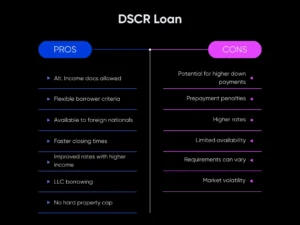
Pros:- No personal income verification
- No tax returns or W-2s required
- Colorado’s low property taxes (~0.50–0.60%) — best PITIA advantage in the cluster
- Dual-market access: suburban SFR and mountain resort STR
- Only major DSCR market with world-class ski resort STR opportunity
- Aerospace/tech/healthcare tenant base — high-income, creditworthy, long-lease
- No limit on financed properties
- LLC borrowing allowed
- 14–21 day closings
- Denver proper entry prices ($590K–$651K) compress DSCR — suburban markets are more favorable
- Colorado 4.4% flat state income tax — unlike Texas; affects cash-on-cash return
- Mountain resort STR requires professional management (20–30% of revenue)
- Defy underwrites STR properties to long-term market rent without 12-month STR history
- Rates above conventional investment loan rates
Denver DSCR Loan Rates
Defy doesn’t publish a single Denver number, because pricing moves with credit, leverage and property type. Start with today’s DSCR loan rates, then check DSCR loan rates by FICO tier to see where a 640, 680 or 720 file actually lands.
Licensing
Colorado is DSCR-eligible with Defy, part of our 38-state DSCR lending footprint for business-purpose investment property loans. See the full list on our state licensing page.
Denver DSCR Rate Scenarios by FICO Tier
| Scenario | Pricing |
|---|---|
| 740+ FICO, 75% LTV, DSCR ≥ 1.0 | ~Matrix-priced |
| 720 FICO, 80% LTV, DSCR ≥ 1.0 | ~Matrix-priced |
| 680 FICO, 75% LTV, DSCR ≥ 1.0 | ~Matrix-priced |
| Any scenario, DSCR 0.75–0.99 | Rate premium applies |
DSCR Loans vs. Conventional Investment Property Loans
| Feature | DSCR Loan | Conventional | Best Choice |
|---|---|---|---|
| Income Verification | Rental income only | Personal income required | Investors → DSCR |
| DTI Consideration | Not used | Required | Self-employed → DSCR |
| Tax Returns | Not required | Required | Complex income → DSCR |
| Property Limit | No limit | Typically 6–10 | Portfolio builders → DSCR |
| LLC Borrowing | Yes | Rarely | Asset protection → DSCR |
| Closing Speed | 14–21 days | 30–45 days | Competitive deals → DSCR |
Denver vs. Other DSCR Markets
| Market | Profile | Unique Angle | Property Tax |
|---|---|---|---|
| Denver, CO | Dual-market: urban + mountain STR | Only cluster market with ski resort STR | ~0.55% |
| Houston, TX | Cash flow capital | Highest DSCR ratios in Texas | ~2.0% |
| Austin, TX | Tech correction play | Softened entry, high-income tech tenants | ~1.9% |
| Dallas, TX | Corporate relocation | #1 PwC/ULI ranked | ~1.8% |
| Nashville, TN | Music city appreciation | Healthcare + tech | ~0.6% |
| Orlando, FL | Tourism + defense dual economy | Disney + UCF corridor | ~1.1% |
Is Denver Better for DSCR Than Other Markets?
Denver is better for:- Investors who want access to the mountain resort STR market — no other city in the cluster offers this
- Aerospace and defense tenant base — highest-income, most stable professional tenants in the cluster
- Property tax advantage — 0.55% vs. 1.8–2.1% in Texas markets, materially improving PITIA
- Dual-strategy flexibility — same state, same lender, two completely different investment profiles
- Pure cash flow in the urban core — $590K–$651K entry prices compress DSCR ratios
- Colorado state income tax — 4.4% flat rate reduces cash-on-cash vs. Texas
- STR qualification without history — Defy underwrites to long-term rent without 12 months STR income
What DSCR Deals Are Actually Closing in Denver Right Now
Based on current underwriting across active Denver and Colorado metro scenarios:- DSCR range: 0.80–0.95x most common in suburban Denver on long-term rent; 1.0x+ achievable in STR markets with 12-month history
- LTV: 75–80% most common — 85% LTV available for 740+ FICO
- Property types: SFR dominant in suburbs; mountain resort condos and townhomes active in STR markets
- Best-performing submarkets: Aurora and Westminster outperforming for long-term rental DSCR; Breckenridge and Steamboat strongest for STR-basis qualification
- Toughest scenarios: Denver proper urban core — entry prices consistently push DSCR below 0.75x on long-term rent alone
- Recent trend (last 30–60 days): Active listings up 5% year-over-year, closed prices down 3% — buyer’s market emerging, creating better entry points in suburban markets
- Rent-to-price ratios: Most approved suburban Denver deals show rent-to-price ratios of 0.50%–0.65% monthly (e.g. $2,400 rent on $420,000 purchase = 0.57%). Below 0.50% typically pushes DSCR below 0.75x even with Colorado’s low taxes.
Why Investors Trust Defy for Denver DSCR Loans
- Direct lender — no broker middleman
- 0.75 minimum DSCR — critical for Denver suburban deals that run 0.80–0.90x
- STR-eligible — Defy underwrites mountain resort STR with 12-month verified income history
- Non-QM specialists — DSCR is Defy’s core product
- 14–21 day closings
- No loan maximum — scales from $380K suburban Aurora to $1.5M Breckenridge ski property
- Licensed across 30+ states including Colorado
- Underwrites both suburban Denver SFR and Colorado mountain resort STR scenarios daily — we know this market
Frequently Asked Questions
What is a DSCR loan in Denver, CO?
A DSCR loan in Denver — also called a no-income investment property loan — qualifies based on rental income rather than personal income. Available for suburban Denver long-term rentals and Colorado mountain resort STR properties with 12 months of verified income history.What is Denver’s property tax rate for investment properties?
Approximately 0.50–0.60% effective rate — among the lowest of any major U.S. metro. On a $450,000 suburban Denver property, annual taxes run ~$2,500, or $208/month. This is Defy’s lowest property tax market in the entire cluster, significantly improving PITIA and DSCR ratios.Does Colorado have state income tax?
Yes — Colorado has a 4.4% flat state income tax on rental income. Unlike Texas (no state income tax), this affects your cash-on-cash return. It does not affect DSCR qualification — DSCR is calculated gross rental income vs. PITIA — but factor it into your overall investment analysis.Can I use a DSCR loan for a Breckenridge or Vail ski rental?
Yes — for properties with 12 months of verified STR income history, Defy can underwrite using that income. For new acquisitions without STR history, Defy underwrites to long-term market rent from the appraisal. Mountain resort properties often produce strong DSCR on long-term rent alone given Colorado’s low property tax rates.What are the best suburbs for DSCR loans in Denver?
Aurora, Lakewood, Westminster, Arvada, and Englewood. These submarkets offer entry prices of $380,000–$500,000, strong aerospace and tech professional tenant demand, and DSCR ratios of 0.80–0.95x on long-term rent — among the strongest in the Denver metro.What is the minimum credit score for a Denver DSCR loan?
640 minimum FICO at Defy. 720+ unlocks best rates and highest LTV.How much down payment is required?
Typically 20–25%. Defy goes to 85% LTV (15% down) for qualifying SFR purchases with 740+ FICO and DSCR of 1.0 or better.Is Denver a good DSCR investment market in 2026?
Yes — particularly for investors who understand the dual-market thesis. Suburban Denver offers aerospace/tech professional tenants with Colorado’s property tax advantage. Colorado mountain resort markets offer premium STR income with no comparable in the cluster. See our dedicated guide to DSCR loans for Colorado ski properties for a full breakdown of mountain resort DSCR financing.Can DSCR loans use Airbnb or Vrbo income in Colorado?
Yes — with 12 months of verified STR income history (Airbnb/Vrbo statements or property manager records). Without 12 months of history, Defy underwrites to long-term market rent from the appraisal. The deal must work on annual lease income first; STR premium is upside, not the qualification basis. For established Colorado STR operators with income history, full STR income can be used for DSCR qualification.Does Defy lend throughout Colorado?
Yes — including Aurora, Lakewood, Westminster, Broomfield, Englewood, Thornton, Fort Collins, Colorado Springs, and mountain resort counties including Summit (Breckenridge/Keystone), Eagle (Vail), and Routt (Steamboat Springs).Why are Denver’s DSCR ratios better than the entry price suggests?
Colorado’s ~0.55% effective property tax rate is the primary reason. Compare: a $450,000 Denver property generates $225/month in taxes vs. $750/month for the same purchase in Houston at 2.0% and $945/month in Austin at 2.1%. That $520–$720/month difference in PITIA directly improves DSCR by 0.15–0.25x on a typical deal.This content is for informational purposes only and does not constitute a loan commitment or guarantee of financing. All loan scenarios are subject to credit approval, appraisal, underwriting review, and program eligibility. Rates, guidelines, and market data referenced are subject to change without notice.
No hard credit pull. 24-hour quote turnaround.
Investing beyond Denver? See the complete Colorado DSCR loans guide for statewide loan parameters, metro comparisons, and how to qualify.

