

Last Updated: April 2026
What is a DSCR loan in Austin?
A DSCR loan in Austin is an investment property mortgage that qualifies borrowers using rental income instead of personal income. Most lenders require a 0.75–1.0 DSCR and allow up to 85% LTV. No W-2s, tax returns, or DTI verification required.
Austin DSCR Loan Snapshot — April 2026
- Minimum DSCR: 0.75
- Maximum LTV: 85% (SFR purchase)
- Minimum FICO: 640
- Median home value: ~$499,000
- Average long-term rent: $1,800–$2,400/month
- STR average daily rate (near downtown): ~$225/night
- STR monthly revenue (typical listing): ~$2,794
- Property tax effective rate: 1.65–2.10% (no homestead exemption on investment properties)
- Closing timeline: 14–21 days
- No income documentation required
- LLC borrowing: Yes
- Texas state income tax: None
Key Takeaways
- DSCR loans qualify on rental income — no personal income required
- Defy minimum DSCR: 0.75
- Up to 85% LTV on SFR purchases
- No tax returns or W-2s required
- No maximum loan amount
- Closes in 14–21 days
- Austin is in a buyer’s market — prices softened from peak, entry points improved
- Tech tenant base: Dell, Apple, Tesla, Oracle, Google, Meta, Amazon all major Austin employers
- STR regulations are complex — Type 2 non-owner-occupied licenses difficult to obtain; July 1, 2026 is key enforcement date
- Property taxes are high — 1.65–2.10% effective rate, always include in PITIA
DSCR Loans Austin, TX — Quick Answer
A DSCR loan in Austin, TX is an investment property mortgage that qualifies based on rental income — not W-2s or tax returns. Austin is a tech-driven rental market with high-income tenants but elevated property taxes (1.65–2.10%) that compress DSCR ratios. Defy Mortgage: 0.75 minimum DSCR, 85% LTV, closes in 14–21 days.
Table of Contents
- What Is a DSCR Loan in Austin?
- Why Austin’s Correction Creates a DSCR Opportunity
- Austin DSCR Loan Requirements
- Austin Neighborhoods for DSCR Loan Investments
- The Austin STR Opportunity — And the July 1, 2026 Warning
- DSCR Calculation Example
- Who DSCR Loans Work Best For
- Pros and Cons
- Austin DSCR Loan Rates
- DSCR Loans vs. Conventional
- Austin vs. Other Texas and Southeast Markets
- Austin DSCR Loan Zoning and STR Regulations
- Frequently Asked Questions
A DSCR loan in Austin is an investment property mortgage that qualifies borrowers based on the property’s rental income rather than personal income, W-2s, or tax returns. Austin’s real estate market has shifted from a seller’s market at peak tech-boom pricing to a buyer’s market with improved entry points and sustained rental demand from one of the highest concentrations of tech industry employees in the United States.
DSCR loans in Austin, Texas present one of the most distinctive investment opportunities in the Defy city cluster — not because Austin is the hottest market, but because it has corrected from its hottest point. Median listing prices declined approximately 4.5% to ~$499,000, inventory has expanded to 4.2 months (a balanced market), and homes are sitting longer than they did at the pandemic-era peak. For the DSCR investor, this is the entry window. The tenant base hasn’t changed — Dell Technologies, Apple Inc., Tesla, Inc., Oracle Corporation, Google, Meta Platforms, and Amazon all maintain major Austin operations, creating a deep pool of high-income tech professionals who rent before they buy. Defy Mortgage provides DSCR loans in Austin, TX — including Austin DSCR loans, investment property DSCR loans Austin TX, rental property loans, investor home loans, and no-income mortgage options for Texas real estate investors. 0.75 minimum DSCR, up to 85% LTV, no tax returns, closes in 14–21 days.
Defy Mortgage originates DSCR loans nationwide and actively lends in Texas, including the Austin metro across Travis, Williamson, and Hays counties. Our underwriting team evaluates rental income, property taxes, and DSCR thresholds daily across hundreds of investor scenarios, giving us real-time visibility into what deals are currently closing — not theoretical guidelines.
Austin investors considering other Texas and Southeast markets may also want to review Houston DSCR loans, Dallas DSCR loans, Tampa DSCR loans, Denver DSCR loans, and Nashville DSCR loans.
What Is a DSCR Loan in Austin?
Austin is one of four Texas metros in Defy’s DSCR footprint — the Texas DSCR loans complete guide covers the statewide picture, from property-tax math to submarket trends.
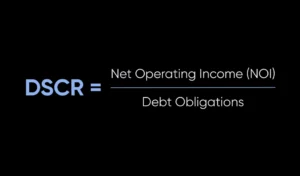
Formula (what is a DSCR loan →):
DSCR = Rental Income ÷ PITIA
- Rental Income = market rent from appraisal (Form 1007) or 12-month rental history
- PITIA = principal + interest + property taxes + insurance + HOA dues
Austin-specific note: Property taxes in Austin (Travis County and surrounding) run 1.65–2.10% of assessed value annually — among the highest effective rates in the Texas metro markets. Investment properties do not qualify for the homestead exemption. Always calculate PITIA using actual tax rates, not estimates. A deal that works at 1.5% may not work at 2.0%.
Want to run your numbers? Use our DSCR loan calculator →
Why Austin’s Correction Creates a DSCR Opportunity
The Austin market narrative has shifted — and that shift creates opportunity for investors who understand what they’re looking at.
What happened: Austin experienced one of the most aggressive real estate price run-ups in the country between 2020 and 2023, driven by the tech industry migration (Tesla HQ, Oracle HQ, Apple expansion, and thousands of tech workers relocating from California). Prices peaked well above $600,000 median in many submarkets.
What happened next: The market corrected. By late 2025, median listing prices declined approximately 4.5% to ~$499,000. Inventory expanded to 4.2 months — a balanced market by historical standards. Homes are taking longer to sell.
Why this is the DSCR investor’s moment:
- Lower entry prices — acquiring at corrected pricing improves DSCR ratios relative to peak-era buyers
- Rental demand unchanged — the tech employers didn’t leave; the workers who rent before buying are still here
- Less competition — speculative buyers who drove prices up have largely exited; serious long-term investors remain
- Price stabilization ahead — analysts project gradual price stabilization through 2026, not further declines
The tenant profile: Austin’s tech tenant base is among the highest-income renter populations in the country. Dell Technologies (headquarters, Round Rock), Apple Inc. (15,000 employees at Austin campus), Tesla, Inc. (Gigafactory and headquarters), Oracle Corporation (headquarters), Google, Meta Platforms, and Amazon all maintain significant Austin operations. These are STEM professionals, engineers, and tech workers earning $100,000–$200,000+ who rent high-quality properties for 1–3 years while evaluating permanent purchase.
Data compiled from Austin Board of Realtors, U.S. Census Bureau, AirDNA, StaySTRA, and local 2026 market reports. Always underwrite to current figures.
Get Your Austin DSCR Quote in 24 Hours →
No hard credit pull. 24-hour quote turnaround.
Austin DSCR Loan Requirements at Defy
| Requirement | Defy Mortgage |
|---|---|
| Minimum DSCR | 0.75 |
| Maximum LTV (Purchase SFR) | 85% |
| Maximum LTV (Cash-Out Refi) | 80% |
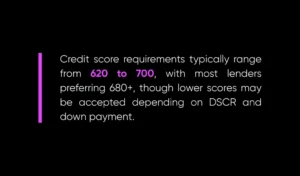
| Minimum Credit Score | 640 |
| Maximum Loan Amount | No maximum |
| Income Documentation | None required |
| Tax Returns Required | No |
| W-2s Required | No |
| LLC Borrowing | Yes |
| Closing Timeline | 14–21 days |
| STR Eligible | Yes — in compliant licensed zones |
Austin Neighborhoods for DSCR Loan Investments
High-Income Tech Professional Tenant Markets
North Austin / Domain Area (78758, 78759)
The Domain is Austin’s “second downtown” — a dense mixed-use district surrounded by Apple’s campus and major tech offices. Young tech professionals, remote workers, and corporate relocatees. Premium rents, strong demand, low vacancy. Entry prices $400,000–$550,000 range. Best fit for investors targeting the highest-income long-term tenant profile.
Round Rock / Pflugerville (adjacent metro)
Dell Technologies headquarters in Round Rock. More affordable entry prices ($320,000–$420,000) than central Austin with strong tech worker rental demand. DSCR ratios more favorable than premium Austin submarkets. Best fit for cash flow-focused investors.
Cedar Park / Leander (northwest metro)
Fastest-growing Austin suburb. Family rental demand, newer construction, strong school districts. Lower entry prices, strong appreciation outlook as the metro expands northward. Best fit for investors buying new or near-new construction.
Appreciation and Urban Markets
East Austin (78702)
The highest-appreciation submarket in the city over the past decade. Walkable, culturally distinct, strong STR demand near downtown and event venues. Entry prices premium ($550,000–$750,000+) but appreciation history is compelling. Best fit for long-term hold investors or STR investors with Type 1 license eligibility.
South Congress / South Lamar (78704)
Zilker, Bouldin Creek, South Lamar — Austin’s most lifestyle-driven corridor. Premium rents, strong STR demand, cultural amenity density. Expensive entry but strong tenant demand. Best fit for investors buying for appreciation and STR in owner-occupied structures.
Mueller / Hyde Park / Central Austin
Urban infill, walkable, University of Texas proximity. Mixed tenant base: UT faculty/staff, young professionals, healthcare workers. Stable long-term demand. Entry prices $500,000–$650,000.
Cash Flow Markets
Pflugerville / Manor / Del Valle (east metro)
More affordable entry prices ($280,000–$380,000), strong workforce tenant demand, proximity to Tesla Gigafactory (east Austin). Better DSCR ratios on paper. Best fit for investors prioritizing cash flow over appreciation.
The Austin STR Opportunity — And the July 1, 2026 Warning
Austin’s STR market is one of the largest in the country by listing volume — 14,659 active listings with average monthly revenue of ~$2,794 and a $225 average daily rate. Three anchor events anchor the revenue calendar: SXSW (March), Austin City Limits (October), and Formula 1 US Grand Prix (November). Peak months like SXSW can reach $3,663/month revenue.
However — the regulatory landscape is critical to understand before buying:
Type 1 vs. Type 2 Licenses:
- Type 1 (owner-occupied): STR where the owner lives on the property. Relatively accessible.
- Type 2 (non-owner-occupied): The license most investors need for a pure investment property. Historically very difficult to obtain in the City of Austin proper.
The 1,000-foot separation rule: Type 2 licenses cannot be within 1,000 feet of another Type 2 license. This geographic restriction limits portfolio clustering and effectively caps the supply of licensed non-owner-occupied STRs in the city.
July 1, 2026 — Platform Enforcement Date:
Starting July 1, 2026, Airbnb and Vrbo are required to display license status and can be asked to remove unlicensed listings. If you are buying into Austin’s STR market, your property must have a valid license in place before this date. Unlicensed operators face significant supply reduction after enforcement begins. Licensed operators benefit from reduced competition.
Austin STR regulations are among the most complex in Texas — more so than Dallas or Houston, and more restrictive than the surrounding Hill Country municipalities.
Defy’s underwriting position: Defy underwrites all Austin DSCR loans to long-term market rent (Form 1007). STR income projections are not used unless the property has 12 months of verified STR history. If the deal doesn’t work on long-term rent, STR premium is upside, not underwriting.
Where STR works better near Austin:
The surrounding Hill Country — Dripping Springs, Wimberley, Lakeway, and unincorporated Travis/Hays County areas — offers significantly friendlier STR environments with strong tourism demand and fewer restrictions.
Common DSCR Mistakes Austin Investors Make
- Underestimating property taxes — 1.65–2.10% effective rate on investment property with no homestead exemption. A deal that pencils at 1.5% may not work at 2.0%. Always use the actual assessed value and tax rate.
- Assuming Type 2 STR license is obtainable — most investment properties in Austin proper cannot get a Type 2 license. Verify before contracting if STR is part of your strategy.
- Buying at 2022 peak comparables — the market has corrected. Recent comps should reflect 2025–2026 pricing, not 2021–2022 peak.
- Ignoring HOA fees on condos — common in the Domain and Mueller areas. Always include in PITIA.
- Not accounting for the July 1, 2026 STR enforcement date — if you’re closing on an Austin STR property, confirm license status before that date.
DSCR Calculation Example — Austin Rental Property
Scenario: Long-term rental in Round Rock / North Austin tech corridor
- Purchase price: $420,000
- Down payment (20%): $84,000
- Loan amount: $336,000
- Rate: Illustrative market rate, 30-year fixed
- Monthly P&I: $2,236
- Property taxes (est.): $735/month (~2.1% effective rate, Travis County investment property)
- Insurance (est.): $140/month (inland Texas — lower than coastal FL)
- HOA: $0 (SFR)
- Total PITIA: $3,111/month
- Market rent: $2,400/month
- DSCR = $2,400 ÷ $3,111 = 0.77 ✅ (qualifies at Defy’s 0.75 minimum)
DSCR Sensitivity to Property Tax Rate — $420,000 Purchase, $336,000 Loan, $2,400 Rent
| Tax Rate | Monthly Taxes | Total PITIA | DSCR |
|---|---|---|---|
| 1.65% | $578 | $2,954 | 0.81 ✅ |
| 1.80% | $630 | $3,006 | 0.80 ✅ |
| 2.00% | $700 | $3,076 | 0.78 ✅ |
| 2.10% | $735 | $3,111 | 0.77 ✅ |
Note: Austin’s high property tax rate (2.1% in this example) is the primary DSCR pressure point. At a 1.65% rate, PITIA drops to ~$2,800 and DSCR improves to 0.86. Always use actual tax figures.
Run Your Austin Deal Numbers →
Who DSCR Loans Work Best For in Austin
Tech corridor long-term rental investors — targeting Dell Technologies/Apple Inc./Tesla, Inc./Oracle Corporation employee tenants in North Austin, Round Rock, and Cedar Park. Stable, high-income tenants. Near-zero vacancy in well-maintained properties.
Correction-window buyers — investors who understand the market has pulled back from peak and are positioning for 5–10 year appreciation as Austin’s tech economy continues expanding.
Portfolio builders — no limit on financed properties. DSCR loans allow scaling not possible with conventional financing past 6–10 properties.
Self-employed investors — Austin has one of the highest concentrations of entrepreneurs and self-employed professionals in Texas. DSCR ignores tax returns entirely.
LLC investors — borrow in your LLC name for asset protection.
Who this is NOT for:
- Investors expecting Type 2 STR licensing on a standard Austin investment property — verify before contracting
- Buyers trying to underwrite at peak 2022 pricing — the market has corrected and rent growth has moderated
- W-2 borrowers who qualify easily for conventional investment loans
Pros and Cons of DSCR Loans in Austin
Pros:
- No personal income verification
- No tax returns or W-2s required
- No limit on financed properties
- LLC borrowing allowed
- 0.75 minimum DSCR — important given Austin’s high property tax pressure on PITIA
- 14–21 day closings
- No Texas state income tax — improves cash-on-cash returns
- Buyer’s market — improved entry prices vs. 2022 peak
- Deep tech professional tenant pool
Cons:
- High property taxes (1.65–2.10%) significantly compress DSCR — must use actual rates
- Austin STR Type 2 licenses difficult to obtain in city proper
- Prices corrected but still among highest in Texas
- Rates above conventional investment loan rates
- July 1, 2026 STR enforcement creates risk for unlicensed STR investors
Austin DSCR Loan Rates
Defy doesn’t publish a single Austin number, because pricing moves with credit, leverage and property type. Start with today’s DSCR loan rates, then check DSCR loan rates by FICO tier to see where a 640, 680 or 720 file actually lands.
Licensing
Texas is DSCR-eligible with Defy, part of our 38-state DSCR lending footprint for business-purpose investment property loans. See the full list on our state licensing page.
Austin DSCR Rate Scenarios by FICO Tier
| Scenario | Pricing |
|---|---|
| 740+ FICO, 75% LTV, DSCR ≥ 1.0 | ~Matrix-priced |
| 720 FICO, 80% LTV, DSCR ≥ 1.0 | ~Matrix-priced |
| 680 FICO, 75% LTV, DSCR ≥ 1.0 | ~Matrix-priced |
| Any scenario, DSCR 0.75–0.99 | Rate premium applies |
⚠️ Rates change daily — these are approximate indications for April 2026 only.
See current Non-QM rates → for full breakdown by product and LTV tier.
See Today’s Austin DSCR Rates →
DSCR Loans vs. Conventional Investment Property Loans
| Feature | DSCR Loan | Conventional | Best Choice |
|---|---|---|---|
| Income Verification | Rental income only | Personal income required | Investors → DSCR |
| DTI Consideration | Not used | Required | Self-employed → DSCR |
| Tax Returns | Not required | Required | Complex income → DSCR |
| Property Limit | No limit | Typically 6–10 | Portfolio builders → DSCR |
| LLC Borrowing | Yes | Rarely | Asset protection → DSCR |
| Closing Speed | 14–21 days | 30–45 days | Competitive deals → DSCR |
Austin vs. Other Texas and Southeast DSCR Markets
| Market | Profile | Unique Angle |
|---|---|---|
| Austin, TX | Tech correction play | Softened entry prices, deep tech tenant pool |
| Dallas, TX | Corporate relocation scale | #1 PwC/ULI ranked, 100+ HQ relocations |
| Nashville, TN | Music city appreciation | Healthcare + tech diversification |
| Tampa, FL | Gulf Coast appreciation | Insurance caution required |
| Orlando, FL | Dual economy — tourism + defense | Disney + UCF defense corridor |
| Raleigh, NC | Research Triangle tech growth | 3 Tier 1 universities, mid-term rental opportunity |
Austin DSCR Loan Zoning and STR Regulations
Austin short-term rental regulations are governed at the city level and are among the most complex STR regulatory environments in Texas — more layered than Dallas or Houston, where regulations are less restrictive.
License Types:
- Type 1: Owner-occupied STR. Owner lives on property. More accessible.
- Type 2: Non-owner-occupied STR. Full investment property. Historically very difficult to license in Austin proper.
- Type 3: Commercial STR. Hotels/motels. Not applicable to residential investors.
Key regulations:
- 1,000-foot separation rule between Type 2 licenses — limits clustering
- Valid license required for all STR activity within Austin city limits
- July 1, 2026: Airbnb and Vrbo required to display license status and can remove unlicensed listings
Recent changes (effective October 2025):
- License validity extended from 1 year to 2 years
- Certificate of Occupancy and insurance requirements removed for new applicants
- Tenant operators now permitted with written landlord consent
Hill Country alternative: Dripping Springs, Wimberley, Lakeway, and unincorporated Hays/Travis County areas have significantly more permissive STR environments with strong tourism demand from Austin visitors.
What Defy requires for STR DSCR loans in Austin:
- Property must be in a STR-compliant zone with valid or obtainable license
- Type 2 eligibility must be confirmed before contracting
- Defy underwrites to long-term market rent — STR projections not used without 12 months verified history
Why Investors Trust Defy for Austin DSCR Loans
- Direct lender — no broker middleman, no extra pricing layer
- 0.75 minimum DSCR — critical in a high-property-tax market like Austin where PITIA compression is real
- Non-QM specialists — DSCR is Defy’s core product
- 14–21 day closings — faster than conventional investment loans
- No loan maximum — scales with your portfolio
- Licensed across 30+ states including Texas
Defy Mortgage is a direct Non-QM lender founded in 2023 and headquartered in Nashville, TN. DSCR loans are our core product — not an add-on to a conventional lending operation.
What DSCR Deals Are Actually Closing in Austin Right Now
Based on current underwriting across active Austin metro scenarios:
- DSCR range: 0.75–0.90 most common — Austin’s tax burden means few deals close above 1.0 on long-term rent alone
- LTV: 70–80% most common — 85% LTV available for 740+ FICO but less common at current price points
- Property types: SFR dominant — condos less common due to HOA compression on PITIA
- Best-performing submarkets: Round Rock and Pflugerville outperforming core Austin for DSCR ratios due to lower entry prices and strong Dell/tech tenant demand
- Toughest submarkets: East Austin and South Congress — premium entry prices compress DSCR below 0.75 on most scenarios; better suited for appreciation play or owner-occupied STR
Is Austin Better for DSCR Than Other Texas Markets?
Austin is better for:
- High-income tenant stability — tech workforce from Dell, Apple, Tesla, Oracle earning $100K–$200K+
- Long-term appreciation from employer concentration and continued tech migration
- Correction-window entry pricing relative to 2022 peak
Austin is worse for:
- Property taxes — 1.65–2.10% effective rate is the highest in the Texas DSCR cluster
- STR licensing — Type 2 restrictions make non-owner-occupied Airbnb strategy difficult in the city proper
- Near-term cash flow — DSCR ratios are tighter than Dallas or Houston at comparable price points
Bottom line: Austin is a long-term hold market, not a pure cash flow market. Investors underwriting for appreciation and tenant quality will find it compelling. Investors underwriting purely for monthly yield should look at Round Rock, Pflugerville, or the Dallas metro instead.
And the blunt truth on STR: If your Austin deal only works using short-term rental income, it is not a DSCR-viable deal. Most Austin DSCR deals that rely on short-term rental income fail underwriting when evaluated against long-term rent.
Frequently Asked Questions
What is a DSCR loan in Austin, TX?
A DSCR loan in Austin qualifies based on rental income rather than personal income. No W-2s or tax returns required. Available for long-term rentals and STR-compliant properties.
What DSCR is needed for an Austin investment property?
Defy requires a minimum of 0.75. Austin’s high property taxes compress DSCR relative to other markets — always calculate PITIA with actual tax rates (1.65–2.10% on investment properties).
Are property taxes high in Austin for investment properties?
Yes — one of the highest effective rates in the major Texas markets at 1.65–2.10%. Investment properties do not qualify for the homestead exemption. This is the biggest DSCR pressure point in Austin deals.
Can I use a DSCR loan for an Airbnb in Austin?
Depends on the property. Type 2 (non-owner-occupied) STR licenses are difficult to obtain in Austin proper. Verify license eligibility before contracting. Starting July 1, 2026, Airbnb/Vrbo enforce license status. Defy underwrites to long-term market rent.
What is the minimum credit score for an Austin DSCR loan?
640 minimum FICO at Defy. 720+ unlocks best rates and highest LTV.
How much down payment is required?
Typically 20–25% down. Defy goes to 85% LTV (15% down) for qualifying SFR purchases with 740+ FICO and DSCR of 1.0 or better.
Is Austin a good market for DSCR investment in 2026?
Yes — particularly for investors who understand the correction. Entry prices are improved from peak, tech employers remain, and rental demand from high-income tech workers is sustained. The key is underwriting conservatively to current property taxes and long-term market rents.
Does Defy lend throughout the Austin metro?
Yes — including Round Rock, Cedar Park, Pflugerville, Leander, Manor, Buda, Kyle, Dripping Springs, and all of Travis, Williamson, Hays, and Bastrop counties.
How fast can Defy close an Austin DSCR loan?
14–21 days for qualifying scenarios with complete documentation.
Why is Austin’s property tax so important for DSCR calculation?
At 2.0% on a $420,000 investment property, annual taxes are ~$8,400 — $700/month. That’s $700/month added to PITIA that directly reduces your DSCR ratio. Many investors underestimate this and get surprised at underwriting.
Written by Ashley Heesch, Head of Marketing at Defy Mortgage. Ashley brings 8 years of marketing experience to making non-QM lending accessible and clear for investors and self-employed borrowers. View author page →
This content is for informational purposes only and does not constitute a loan commitment or guarantee of financing. All loan scenarios are subject to credit approval, appraisal, underwriting review, and program eligibility. Rates, guidelines, and market data referenced are subject to change without notice.
Ready to finance your next Austin investment property? Get your Austin DSCR quote in 24 hours. Close in as little as 14 days. No credit pull required for your initial quote.
📞 (615) 622-1032
Get Your Austin DSCR Quote in 24 Hours →
No hard credit pull. 24-hour quote turnaround.

