


Updated: March 2026
A P&L loan (profit and loss mortgage) is a Non-QM mortgage that qualifies self-employed borrowers using business profit and loss statements instead of tax returns.
For business owners whose tax strategies reduce reported income well below actual earnings, a P&L loan often produces higher qualifying income than any other mortgage program — including bank statement loans.
This guide breaks down the exact profit and loss loan requirements lenders use in 2026, and where Defy Mortgage’s program stands relative to the market.
P&L Loan Requirements (Quick Answer)
P&L loan requirements in 2026 typically include:
- 12 or 24 months of CPA-prepared profit and loss statements
- Minimum 620–680 credit score
- 10–20% down payment depending on LTV
- 2 years of self-employment history
- 3–12 months of cash reserves
- Supporting bank statements (2–3 months)
These profit and loss mortgage requirements apply to most self-employed mortgage programs in the Non-QM market.
Compared to conventional loans, P&L loans offer more flexible income qualification but typically carry higher interest rates due to alternative documentation.
P&L loans are not ideal for borrowers with high business expenses or inconsistent profitability — bank statement loans or DSCR loans may produce higher qualifying income in those cases.
What Is a P&L Loan (Profit and Loss Mortgage)?
Definition: A P&L loan (profit and loss mortgage) is a Non-QM mortgage that uses a CPA-prepared profit and loss statement to calculate qualifying income based on net business profit over a 12–24 month period.
A P&L loan is a Non-QM mortgage that uses a business profit and loss statement to calculate qualifying income instead of W-2s, tax returns, or bank deposits.
Lenders review net profit — revenue minus business expenses — over a 12 or 24-month period to determine average monthly income and maximum loan amount.
P&L loans are ideal for self-employed borrowers, business owners, consultants, and independent contractors who maintain organized financials and whose net business income is a more accurate representation of their earning power than their tax returns.
Borrowers who have been denied for a bank statement loan — often because of complex deposit patterns or intermingled accounts — frequently qualify using a P&L instead.
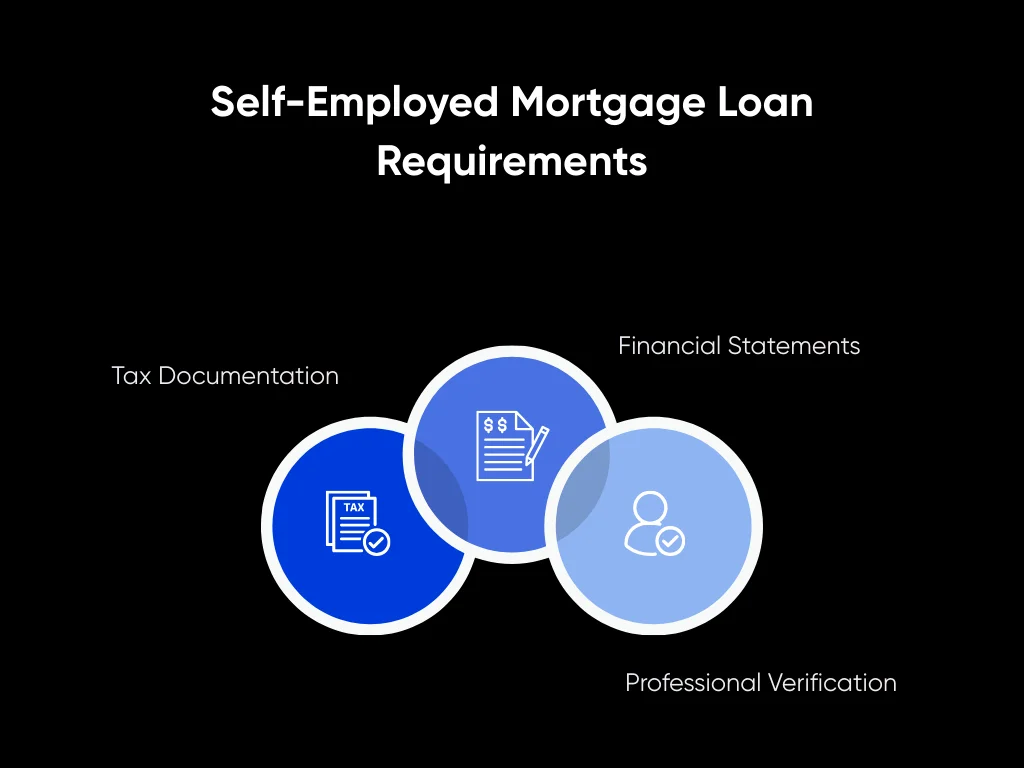
The 5 Core Requirements
1. Profit and Loss Statements — 12 or 24 Months
Lenders require a profit and loss statement covering either the most recent 12 or 24 months. Most programs require the P&L to be prepared by a licensed CPA, certified tax preparer, or IRS-enrolled tax agent. Self-prepared statements are not accepted by most lenders.
12-month P&L: Better for borrowers with recent income growth who don’t want prior years averaged in.
24-month P&L: Preferred by lenders as it demonstrates income consistency. May produce higher qualifying income for established businesses with stable revenue.
At Defy Mortgage, both 12-month and 24-month P&L options are available.
2. Income Calculation — How Lenders Use Your P&L
Lenders use the net income figure from your P&L — revenue minus business expenses — as qualifying income. This is then averaged monthly over the statement period.
Unlike bank statement loans, there is no expense factor applied. If your P&L shows $200,000 in net profit over 12 months, your qualifying monthly income is $16,667. The calculation is clean and direct.
Most lenders also require 2–3 months of supporting bank statements to verify that the income shown on the P&L is consistent with actual cash flow. This cross-check protects both the borrower and the lender.
Consistent month-over-month profitability matters more than total revenue — lenders prioritize stable, recurring income over one-time spikes.
Example: If your CPA-prepared P&L shows $240,000 in annual net income over 12 months, your qualifying monthly income is $20,000/month. No expense factor. No adjustments. Just net income divided by months.
3. Credit Score
The market standard for P&L loans is 620–680 FICO minimum. Programs requiring only 12-month statements typically require slightly higher credit scores.
At Defy Mortgage, the minimum credit score is 640. Borrowers above 720 access the most favorable rate and LTV options.
4. Loan-to-Value (LTV) and Down Payment
| Transaction | Market Standard | Defy Mortgage |
|---|---|---|
| Purchase — Primary | Up to 80–85% LTV | Up to 85% LTV |
| Purchase — Investment | Up to 75–80% LTV | Up to 80% LTV |
| Rate/Term Refinance | Up to 80% LTV | Up to 85% LTV |
| Cash-Out Refinance | Up to 75% LTV | Up to 80% LTV |
5. Reserves
Most P&L loan programs require 3 to 12 months of PITI reserves in liquid accounts after closing. Reserve requirements increase for higher LTV transactions and lower credit score scenarios.
At Defy, standard reserves start at 3 months for well-qualified borrowers.
What Documents Are Required
P&L loans require fewer documents than bank statement loans in some ways, but the P&L itself must be professionally prepared. Required documents typically include:
- Government-issued ID
- 12 or 24 months of CPA-prepared profit and loss statements
- 2–3 months of business bank statements (to verify P&L accuracy)
- Business license or CPA letter confirming 2+ years of self-employment
- Signed borrower authorization
- Property documentation (purchase contract or refinance statement)
- Reserve documentation (investment, retirement, or savings accounts)
Who Prepares the P&L Statement?
Most lenders require the profit and loss statement to be prepared by one of the following:
- Licensed CPA (most common)
- CTEC-registered tax preparer
- IRS-enrolled tax agent
Self-prepared statements are generally not accepted. If your business already works with a CPA for tax purposes, the same professional can typically prepare the mortgage P&L at minimal additional cost.
P&L Loan vs. Bank Statement Loan — Which Is Right for You?
Both are Non-QM programs for self-employed borrowers. The right choice depends on your business structure and documentation.
| Factor | P&L Loan | Bank Statement Loan |
|---|---|---|
| Income source | Net profit from P&L | Gross deposits less expense factor |
| Best for | Service businesses with clean books | Businesses with high gross revenue |
| Documentation | CPA-prepared P&L + 2-3 bank statements | 12–24 months of bank statements |
| Income calculation | Net profit ÷ months | Deposits × (1 − expense factor) |
| Complexity | Simpler calculation | More variables |
P&L loans work best for consultants, professional service providers, and businesses with clear revenue and low overhead. Bank statement loans often produce higher qualifying income for businesses with high gross deposits even when expenses are significant.
The key difference: P&L loans use net income directly, while bank statement loans estimate income using gross deposits minus an expense factor.
Who Should Use a P&L Loan?
P&L loans are the right fit for:
- Business owners who maintain organized financials with a CPA
- Consultants and professionals with clean profit margins and low overhead
- Self-employed borrowers whose net income is accurately reflected on a P&L
- Borrowers who’ve been denied for bank statement loans due to complex or intermingled accounts
- Real estate investors who also operate a business and prefer P&L documentation
Investors who qualify based on rental property income instead of personal income may also consider a DSCR loan. See DSCR loan requirements for a full comparison.
P&L loans are one of several Non-QM options designed for self-employed borrowers, alongside bank statement loans, DSCR loans, and asset-based qualification programs.
How Defy’s P&L Program Compares
| Requirement | Market Range | Defy Mortgage |
|---|---|---|
| Statement period | 12 or 24 months | 12 or 24 months |
| Preparer required | CPA / licensed tax professional | CPA / licensed tax professional |
| Supporting bank statements | 2–3 months | 2–3 months |
| Min credit score | 620–680 | 640 |
| Max LTV (purchase primary) | 80–85% | Up to 85% |
| Max loan amount | $3M–$4M | Up to $6M |
| Interest-only option | Some lenders | Available |
| LLC vesting | Not standard | Available |
| Min self-employment history | 2 years | 2 years |
Frequently Asked Questions
What is a P&L loan for a mortgage?
A P&L loan is a Non-QM mortgage that uses a business profit and loss statement — instead of tax returns or W-2s — to verify income for self-employed borrowers. Lenders calculate qualifying income using net profit from a CPA-prepared statement covering the most recent 12 or 24 months.
Who prepares the profit and loss statement for a mortgage?
Most lenders require the P&L to be prepared by a licensed CPA, CTEC-registered tax preparer, or IRS-enrolled tax agent. Self-prepared statements are generally not accepted. Your existing CPA can typically prepare this at minimal additional cost.
What credit score is required for a P&L loan?
Most lenders require a minimum of 620–680 FICO. Defy Mortgage requires 640 for P&L mortgage programs. Higher scores unlock better rates and LTV options.
How is income calculated for a P&L loan?
Lenders use the net income from your P&L — total revenue minus business expenses — and average it monthly over the statement period. Unlike bank statement loans, no separate expense factor is applied. The net figure from your P&L is the qualifying income figure.
Are P&L loans more expensive than conventional loans?
Yes — P&L loans typically carry slightly higher interest rates than conventional mortgages. The trade-off is flexibility: self-employed borrowers who can’t qualify conventionally gain access to financing that reflects their actual business profitability rather than tax-optimized reported income.
Can I use a P&L loan for an investment property?
Yes. P&L loans are available for primary residences, second homes, and investment properties. For investment properties, maximum LTV is typically 75–80%. Investors with rental income as their primary qualification may also consider a DSCR loan as an alternative.
For current Non-QM rates on P&L loans, see our live rate page. For a comparison of income documentation options, see bank statement loan requirements.
For a full comparison of all Non-QM qualification methods, see our Non-QM loan requirements guide.
Ready to Qualify Using Your P&L?
Most borrowers are surprised by how much income they can document through a properly prepared P&L — especially compared to what their tax returns show.
Not sure if a P&L loan or bank statement loan will qualify you for more? Upload your profit and loss statement and get a side-by-side income analysis in minutes. Schedule your P&L loan consultation with Defy Mortgage.