


Updated: March 2026
In Tennessee, DSCR loans allow investors to qualify using rental income instead of personal income, with lenders offering up to 85% LTV and DSCR as low as 0.75 — no W-2s, tax returns, or personal income verification required.
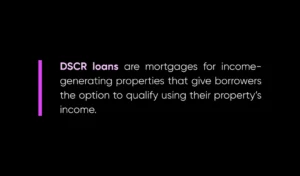
A DSCR loan qualifies real estate investors based on a property’s rental income — not personal income, tax returns, or W-2s.
For Tennessee investors building rental portfolios, DSCR loans in Tennessee are the most flexible and scalable financing tool available in 2026.
Quick Answer: DSCR loans in Tennessee allow real estate investors to qualify based on rental income instead of personal income. Most lenders require a DSCR of 1.0, but programs like Defy Mortgage allow down to 0.75 DSCR and up to 85% LTV. These loans are widely used in Nashville, Memphis, and Smoky Mountain short-term rental markets.
Definition: A DSCR loan is a Non-QM mortgage that qualifies real estate investors based on a property’s rental income rather than personal income by using the debt service coverage ratio (DSCR). No W-2s, tax returns, or personal income verification required.
This guide covers DSCR loan requirements, rates, and eligible property types for Tennessee investors, and how Defy Mortgage’s program compares to the market.
What Is a DSCR Loan in Tennessee?
A DSCR loan in Tennessee is a mortgage for real estate investors that qualifies based on rental income instead of personal income. Borrowers do not need W-2s, tax returns, or employment verification. Most Tennessee DSCR loans require a minimum DSCR of 1.0, but some lenders (like Defy Mortgage) allow DSCR as low as 0.75 with up to 85% LTV.
Compared to conventional investment property loans, DSCR loans in Tennessee allow investors to scale portfolios without debt-to-income (DTI) limitations.
Unlike conventional loans that rely on personal income and debt-to-income ratios, DSCR loans in Tennessee focus entirely on property-level cash flow.
DSCR Loans Tennessee (Quick Answer)
DSCR loan requirements for Tennessee in 2026:
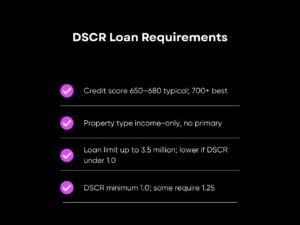
- Minimum DSCR ratio: 0.75 (most lenders require 1.0+)
- Minimum credit score: 640 (most Non-QM lenders start at 620)
- Maximum LTV: up to 85% on SFR purchases
- No personal income, W-2s, or tax returns required
- Eligible for long-term rentals, short-term rentals (STR), and LLCs
- Loan amounts from $75,000 — no hard maximum loan amount
Defy Mortgage is a direct Non-QM lender based in Nashville, actively funding DSCR loans statewide across Tennessee. DSCR loans are available statewide across Tennessee, including major investor markets like Nashville, Memphis, Knoxville, Chattanooga, and the Smoky Mountains.
DSCR loans are not the right fit for owner-occupants, primary residence buyers, or borrowers with no rental income strategy — conventional or Non-QM income programs will be a better fit in those cases.
Many Tennessee investors use DSCR loans to scale portfolios in Nashville and Memphis and acquire STR properties in mountain markets without income limitations.
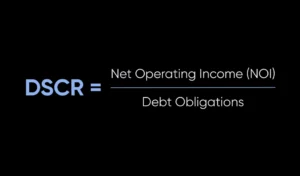
DSCR Formula: DSCR = Rental Income ÷ PITIA
Tennessee DSCR Loan — Quick Qualification Snapshot:
| Requirement | Typical Market | Defy Mortgage |
|---|---|---|
| Min DSCR | 1.0 | 0.75 |
| Min credit score | 640–680 | 640 |
| Max LTV (SFR purchase) | 80% | 85% |
| Income documentation | Required | Not required |
| STR eligible | Some lenders | Yes |
| Loan amounts | Up to $3M–$4M | No hard maximum |
What Is a DSCR Loan?
A DSCR loan is a Non-QM mortgage for real estate investors that qualifies based on debt service coverage ratio — the relationship between a property’s rental income and its monthly mortgage payment.
A DSCR of 1.0 means the property breaks even. Above 1.0 means positive cash flow. Defy Mortgage offers DSCR loans down to 0.75, which covers value-add properties and high-appreciation markets where cash flow is secondary to appreciation strategy.
Because qualification is based on property income, DSCR loans do not require personal income documentation. Self-employed borrowers, portfolio investors, and foreign nationals all qualify using the same criteria — the property’s cash flow.
Tennessee DSCR — built around the visitor economy
Tennessee is one of the most active DSCR markets in the Southeast, and the reason isn’t program mechanics — it’s the visitor economy. The Great Smoky Mountains National Park is the most-visited national park in the United States, drawing more annual visitors than Grand Canyon and Yosemite combined. Nashville ranks consistently among the top US destinations for music tourism, bachelorette weekends, and conventions. Knoxville, Chattanooga, and the Smokies gateway cities (Gatlinburg, Pigeon Forge, Sevierville) all sit inside that visitor footprint. That demand profile shapes how DSCR loans get structured in Tennessee — short-term rental cash flow is the underwriting story for a large share of the volume.
Defy funds Tennessee DSCR deals from $75,000 — no hard maximum loan amount — with 0.75 minimum DSCR, 640 minimum FICO, and up to 80% LTV on SFR purchases. Standard program access — what makes Tennessee distinctive is how investors are using it.
How investors actually use DSCR in Tennessee
Smokies cabin rentals (Gatlinburg, Pigeon Forge, Sevierville). The cabin-rental market in Sevier County is one of the densest STR clusters in the Southeast — multi-bedroom cabins, mountain views, year-round visitor demand. DSCR underwriting on these properties typically uses documented STR cash flow (12 months of platform statements, AirDNA/STR market data, or projected cash flow at conservative occupancy assumptions). The strongest-performing DSCR files in Sevier County are usually 3-5 bedroom cabins at $400-800K price points with established booking history.
Nashville short-term rentals. Davidson County requires a Type 2 (non-owner-occupied) STR permit for properties operating as STRs without owner residence — the permit process is one of the more restrictive in the Southeast. DSCR-funded Nashville STRs need documented permit status before underwriting cash flow off STR rents. Properties without compliant Type 2 permits typically need to qualify on long-term rental rents instead, which can compress DSCR ratio meaningfully.
Knoxville and Chattanooga visitor-market plays. UT football weekends plus Smokies overflow keep Knoxville STR demand strong outside the Davidson County regulatory environment. Chattanooga’s outdoor recreation and weekend-getaway demand drives similar STR economics. Both markets typically underwrite at competitive DSCR terms with fewer permit complications than Nashville.
Memphis long-term rentals. Memphis is the outlier — less STR-driven, more LTR-focused. Entry pricing is materially lower than Middle and East Tennessee, with steady long-term rental cash flow on SFR portfolios. DSCR underwriting on Memphis deals leans more toward LTR rent verification (lease + rent rolls) than STR projections.
Two underwriting realities specific to the Smokies cabin market
Most Tennessee DSCR content stops at the visitor-economy framing. What separates lenders who actually write volume in Sevier County from lenders who occasionally fund a deal there comes down to two operational realities most generic Non-QM programs don’t account for.
Appraisal variance is wider in the Smokies than in suburban Tennessee. Cabin properties in Sevier County and the broader Smokies corridor are each their own micro-product — sleeping capacity, mountain views, hot tubs, theater rooms, road access, slope, log construction quality, and STR performance all materially affect value in ways residential appraisal comp methodology doesn’t always capture. Comp sets are smaller, and the closest “comparable” cabin may differ in $50K-$200K of feature value from the subject property. Appraisals can come in 5-15% below contract more often than in stabilized suburban SFR markets. Lenders who understand the Smokies build appraisal variance into structure from the start — sometimes adjusting LTV expectations before appraisal rather than after, especially on cabins above $700K with non-standard construction or amenity packages.
Insurance cost variance can materially affect DSCR qualification. Mountain STR properties carry insurance dynamics that don’t show up in suburban SFR underwriting. Log construction drives replacement-cost coverage higher than standard SFR (chinking, log siding, custom timber framing — none of which reprice like vinyl-and-stick replacement). Slope exposure, ice storm risk, and occupancy-driven STR premiums add further variance. The result: insurance line items on Smokies cabins can run 1.5-2x what comparable suburban SFR insurance would cost, and that variance flows directly into PITIA — which compresses DSCR ratio. Pulling a real insurance quote at scenario submission, not at close, is the practical underwriting move on Smokies cabin deals.
Revenue normalization matters more than peak-season AirDNA. Most lenders writing serious volume in the Smokies don’t underwrite cabin deals off peak-season occupancy assumptions or aggressive AirDNA projections. Stabilized 12-month revenue with occupancy haircuts (typically 70-75% of submitted projections) matters more than holiday-weekend performance. A cabin showing $120K in projected annual STR revenue based on July-August and December bookings will typically be underwritten on a normalized $85K-95K figure for DSCR calculation. Investors who model their deals at peak-season annualized rates are often surprised when the lender’s normalized figure changes the DSCR math.
What recent Tennessee closings look like
A recent Defy Tennessee closing illustrates the typical Smokies-corridor STR deal:
Pigeon Forge SFR short-term rental purchase. $445,000 loan, 80% LTV, 1.35 DSCR, 755 FICO. Closed in 23 days.
Three things worth noting about this deal:
The 80% LTV is the program ceiling on STR. Some lenders cap STR LTV at 75% even for top-tier borrowers. The borrower here didn’t have to come in with extra down payment to make the deal work — they hit the full 80% available on the program.
The rate reflects standard STR underwriting at high LTV. A 755 FICO at 80% LTV with 1.35 DSCR on STR property is a standard top-tier STR profile — strong credit, healthy cash flow margin, and documented STR cash flow drove the lock without LTV-based rate add-ons.
23 days is fast for STR. STR underwriting can elongate because of cash flow documentation requirements (platform statements, occupancy verification, ADR market analysis). Closing in 23 days required documentation submitted at application — booking history, normalized 12-month revenue (not peak-season annualized), and an underwriter familiar with Sevier County’s specific market dynamics.
The pattern across most Smokies-corridor DSCR deals: documented STR cash flow with stabilized 12-month revenue normalization, 75-80% LTV, FICO bands 700+, rate ranges in line with standard DSCR matrix pricing, and close timelines that hold to standard 14-21 days when documentation is submitted at application.
One less-common scenario — rural Tennessee
Most Tennessee DSCR volume sits in the visitor-economy markets above. Rural Tennessee deals do come up occasionally, and underwriting works differently in those scenarios.
A recent Knoxville-area rural SFR purchase closed at $579,000, 70% LTV, 1.25 DSCR, 760 FICO, closed in 25 days. Rural property typically prices modestly above the matrix anchor (rural appraisal complexity, smaller lender field willing to write rural SFR) and often comes with LTV caps below urban program ceilings. For rural deals, the practical move is asking for property-specific LTV and rate guidance at scenario submission rather than assuming standard published program terms apply.
Tennessee DSCR Loan Requirements (2026)
Minimum DSCR Ratio
Most lenders in Tennessee require a minimum DSCR of 1.0. Defy Mortgage offers DSCR programs down to 0.75, which opens financing for:
- Value-add acquisitions in Memphis where rents will increase post-renovation
- Nashville properties where appreciation strategy outweighs near-term cash flow
- Smoky Mountain STR properties with strong projected seasonal income
Credit Score
The market standard for Tennessee DSCR loans is 640–680 FICO minimum. At Defy, the minimum is 640. Borrowers above 740 unlock the highest LTV options and best rates.
Loan-to-Value (LTV)
| Transaction | Market Standard | Defy Mortgage |
|---|---|---|
| Purchase — SFR | Up to 80% LTV | Up to 85% LTV |
| Purchase — 2–4 Unit | Up to 75–80% LTV | Up to 80% LTV |
| Rate/Term Refinance | Up to 80% LTV | Up to 80% LTV |
| Cash-Out Refinance | Up to 70–75% LTV | Up to 80% LTV |
| Short-Term Rental | Up to 75% LTV | Up to 80% LTV |
Key takeaway: Defy’s 0.75 minimum DSCR, 85% LTV on SFR, and STR eligibility make it one of the most flexible DSCR programs available for Tennessee investors.
Eligible Property Types in Tennessee
- Single-family rentals (SFR)
- 2–4 unit multifamily
- Condos (warrantable and non-warrantable)
- Townhomes and PUDs
- Short-term rentals (STR) — Airbnb, VRBO, and vacation rentals
- Condotels
- Modular homes (site-built)
Reserves
Defy requires a minimum of 3 months PITIA reserves for standard Tennessee DSCR approvals. Higher LTV or sub-1.0 DSCR scenarios may require 6–12 months.
Loan Amounts
Defy Mortgage closes DSCR loans in Tennessee starting at $75,000, with no hard maximum loan amount.
LLC Vesting for Tennessee Investors
DSCR loans are one of the few mortgage products that allow the loan to close in an LLC. This is a significant advantage for Tennessee portfolio investors who want to:
- Separate personal and investment finances
- Limit personal liability exposure
- Maintain cleaner entity-level accounting
Defy Mortgage allows LLC vesting on all Tennessee DSCR transactions.
Coverage is only half of the price. The other half is credit: see DSCR loan rates by FICO tier for where a Tennessee file lands at 640, 680, 720 and above.
Pros and Cons of DSCR Loans in Tennessee
Pros:
- No personal income documentation required
- Scale a Tennessee rental portfolio without DTI limits
- LLC vesting available — ideal for Nashville and Memphis portfolio investors
- STR eligible including Smoky Mountain vacation rental market
- No hard maximum loan amount
- DSCR down to 0.75 — covers Memphis value-add and Nashville appreciation plays
Cons:
- Higher rates than conventional owner-occupied loans
- Investment properties only — not for primary residences
- Larger down payment typically required (15–20%+)
- Prepayment penalties common — factor into exit strategy
Key takeaway: DSCR loans allow Tennessee investors to scale without income limits by qualifying solely on property cash flow — making them the preferred tool for portfolio builders in Nashville, Memphis, and the Smoky Mountains.
Who Should Use a DSCR Loan in Tennessee?
DSCR loans are the right fit for:
- Nashville portfolio investors scaling beyond 4 properties where conventional financing becomes restrictive
- Memphis cash flow investors targeting high-yield SFR with strong rent-to-price ratios
- Smoky Mountain STR investors financing cabin and chalet properties using AirDNA income projections
- Self-employed borrowers whose tax returns understate actual income
- LLC borrowers who want entity-level ownership and liability separation
- Foreign nationals investing in Tennessee real estate without US income documentation
Investors who qualify based on personal income may also consider a bank statement loan or P&L loan for primary residence or second home financing.
P&L loans are one of several Non-QM options designed for self-employed borrowers, alongside bank statement loans, DSCR loans, and asset-based qualification programs.
Common Mistakes Tennessee DSCR Borrowers Make
1. Underestimating Smoky Mountain STR seasonality
Smoky Mountain STR properties generate strong peak revenue but have seasonal variability. Lenders use AirDNA market rent or appraisal-based projections — not best-case booking history. Underwrite conservatively and use annual average income, not peak season rates.
2. Miscalculating DSCR on Memphis properties
Memphis property taxes and insurance can be higher than investors expect, especially in certain zip codes. Always confirm the full PITIA — including taxes, insurance, and HOA — before running your DSCR. Use our DSCR loan calculator to confirm.
3. Not using LLC structure in Nashville
Nashville’s appreciation market has created significant equity for investors. Closing in an LLC separates investment and personal liability and keeps entity accounting clean. Defy allows LLC vesting on all Tennessee DSCR transactions.
4. Ignoring prepayment penalty structure
Most DSCR loans carry step-down prepayment penalties. In Nashville’s fast-moving market, investors who plan to refinance or sell within 3 years should factor this cost into their hold analysis.
How Defy’s Tennessee DSCR Program Compares
| Requirement | Market Standard | Defy Mortgage |
|---|---|---|
| Minimum DSCR | 1.0 | 0.75 |
| Min credit score | 640–680 | 640 |
| Max LTV (SFR purchase) | 80% | 85% |
| STR eligible | Some lenders | Yes, up to 80% LTV |
| First-time STR investor | Rarely | Yes |
| Smoky Mountain STR | Limited | Available |
| LLC vesting | Not standard | Available |
| Max loan amount | $3M–$4M | No hard maximum |
| Interest-only | Some lenders | Available |
| Current rate (740 FICO, 75% LTV) | Market varies | Matrix-priced — see current rates |
Why Choose Defy Mortgage for Tennessee DSCR Loans
- Direct Non-QM lender — we originate, underwrite, and fund in-house. No middleman, no delays.
- Based in Nashville — active in every Tennessee market including Nashville, Memphis, Knoxville, Chattanooga, and the Smoky Mountains
- Faster underwriting — no income documentation means no W-2 or tax return reviews slowing your file
- In-house DSCR expertise — our team has closed DSCR loans across every major Tennessee market
- 0.75 minimum DSCR — the most flexible threshold available, opening deals other lenders decline
- Closes in 14–21 days — driven by appraisal and title, not income verification
When a DSCR Loan May Not Be the Right Fit
DSCR loans are not ideal for every situation. Consider alternatives if:
- You are purchasing a primary residence or owner-occupied property — DSCR loans are for investment properties only
- The property has no rental income potential — qualification depends entirely on cash flow
- You qualify conventionally and want the lowest possible rate — conventional financing typically carries lower rates for strong W-2 borrowers
- You are purchasing vacant land or a fix-and-flip — DSCR loans require income-producing properties
In these cases, bank statement loans, P&L loans, or conventional financing may be a better fit.
Frequently Asked Questions
Can I use projected rent for a DSCR loan in Tennessee?
Yes. For properties that are vacant or being converted from long-term to short-term rental use, lenders use appraiser-supported market rent projections rather than actual lease income. AirDNA data is accepted for STR properties. This means you can qualify for a Tennessee DSCR loan before a tenant is in place.
Do DSCR loans require reserves in Tennessee?
Yes. Most Tennessee DSCR lenders require 3–12 months of PITIA reserves held in liquid accounts after closing. Defy’s standard reserve requirement starts at 3 months for well-qualified borrowers. Higher LTV or sub-1.0 DSCR scenarios may require 6–12 months.
What DSCR is required for a DSCR loan in Tennessee?
Most Tennessee DSCR lenders require a minimum DSCR of 1.0. Defy Mortgage offers DSCR programs down to 0.75 — which covers value-add acquisitions in Memphis, appreciation-play properties in Nashville, and Smoky Mountain STR properties with strong projected seasonal income.
Are DSCR loans available in Tennessee?
Yes. Defy Mortgage is headquartered in Nashville, Tennessee and actively closes DSCR loans for investors across Nashville, Memphis, Knoxville, Chattanooga, Murfreesboro, and the Smoky Mountains.
What is the minimum DSCR ratio required in Tennessee?
Most lenders require a minimum DSCR of 1.0. Defy Mortgage offers DSCR programs down to 0.75, which covers value-add properties, appreciation-play markets, and Smoky Mountain STR properties with strong projected seasonal income.
Can I use a DSCR loan for a Smoky Mountain cabin or STR property?
Yes. Defy offers DSCR financing for short-term rental properties including Smoky Mountain cabins and chalets using AirDNA or appraisal-based market rent calculations. First-time STR investors are eligible, and LTV goes up to 80%.
Do I need to show personal income for a Tennessee DSCR loan?
No. DSCR loans qualify based entirely on the property’s rental income. No W-2s, tax returns, or personal income verification are required.
Can I close a Tennessee DSCR loan in an LLC?
Yes. Defy Mortgage allows LLC vesting on all DSCR transactions in Tennessee.
What are current DSCR loan rates in Tennessee?
Tennessee DSCR pricing moves with the market and your FICO/LTV/DSCR profile — check current DSCR loan rates. 0+. See our Non-QM rates page for a full rate breakdown by LTV and credit tier.
For a full comparison of DSCR requirements, see DSCR loan requirements. To calculate your property’s DSCR, use our DSCR loan calculator. For a full comparison of Non-QM qualification methods, see our Non-QM loan requirements guide.
Ready to Finance Your Tennessee Investment Property?
Most Tennessee investors are surprised how much they qualify for when using rental income instead of personal income.
Get a Tennessee DSCR quote in 5 minutes — no personal income required, fast closings in as little as 2–3 weeks. Schedule your consultation with Defy Mortgage.
Tennessee is DSCR-eligible with Defy. See the full state licensing status for every state where Defy lends, start with the complete DSCR loan guide if you’re new to the product, or go metro-deep with the Nashville DSCR guide.