
Last Updated: April 2026
What is a DSCR loan in Houston? A DSCR loan in Houston — also called a no-income investment property loan — qualifies borrowers using rental income instead of personal income. Houston offers the strongest DSCR ratios in Texas — affordable entry prices with 6–8% rental yields. Defy: 0.75 minimum DSCR, 85% LTV, closes in 14–21 days.
Houston DSCR Loan Snapshot — April 2026
- Minimum DSCR: 0.75
- Maximum LTV: 85% (SFR purchase)
- Minimum FICO: 640
- Typical home value (SFR investment): $261,700–$340,000
- Average long-term rent (SFR): $1,475–$1,600/month
- Typical suburban DSCR ratio: 1.15x–1.30x
- Gross rental yields: 6–8% (highest in major Texas metros)
- Property tax effective rate: 1.82–2.17% (no homestead exemption on investment properties)
- Closing timeline: 14–21 days
- No income documentation required
- LLC borrowing: Yes
- Texas state income tax: None
Key Takeaways
- DSCR loans qualify on rental income — no personal income required
- Defy minimum DSCR: 0.75
- Up to 85% LTV on SFR purchases
- No tax returns or W-2s required
- No maximum loan amount
- Closes in 14–21 days
- Houston produces the strongest DSCR ratios in Texas — suburban properties consistently hitting 1.15x–1.30x
- Most affordable major Texas metro — entry prices $261K–$340K
- 6–8% gross rental yields — highest of any major Texas market
- Property taxes are high — 1.82–2.17% effective rate, always include in PITIA
- No Texas state income tax — improves cash-on-cash return
A DSCR loan in Houston is an investment property mortgage that qualifies borrowers based on the property’s rental income rather than personal income, W-2s, or tax returns. Houston is the cash flow capital of Texas — the most affordable major metro with the highest rental yields, producing DSCR ratios that consistently outperform Dallas and Austin at comparable loan sizes.
Table of Contents
- What Is a DSCR Loan in Houston?
- Why Houston Is Texas’s Best DSCR Market
- Houston DSCR Loan Requirements
- Houston Neighborhoods for DSCR Investment
- DSCR Calculation Example
- The Houston Economy — Why Rental Demand Is Structural
- Who DSCR Loans Work Best For
- Pros and Cons
- Houston DSCR Loan Rates
- DSCR vs. Conventional
- Houston vs. Other Texas and Southeast Markets
- Is Houston Better for DSCR Than Other Texas Markets?
- What DSCR Deals Are Actually Closing in Houston Right Now
- Frequently Asked Questions
DSCR Loans Houston, TX — Quick Answer
Houston is one of four Texas metros in Defy’s DSCR footprint — the Texas DSCR loans complete guide covers the statewide picture, from property-tax math to submarket trends.
A DSCR loan in Houston, TX qualifies based on rental income — not W-2s or tax returns. Houston is Texas’s most affordable major metro with gross rental yields of 6–8% and suburban DSCR ratios of 1.15x–1.30x — the strongest cash flow profile in the state. Defy Mortgage: 0.75 minimum DSCR, 85% LTV, closes in 14–21 days.
DSCR loans in Houston, Texas have a simple distinction from every other major Texas market: Houston is the most consistent major Texas metro for DSCR loans producing positive cash flow on day one. Where Austin is an appreciation play and Dallas is a corporate relocation scale play, Houston is the cash flow play. The numbers are direct: median investment property entry prices of $261,700–$340,000, gross rental yields of 6–8% (highest of any major Texas metro), and suburban DSCR ratios consistently hitting 1.15x–1.30x in communities like Katy, Pearland, Sugar Land, and Cypress. For investors whose primary metric is does this property pay for itself on day one, Houston is the answer. Houston is where DSCR math works without assumptions — run the DSCR math on your deal →. Defy Mortgage provides Houston DSCR loans, investment property DSCR loans Houston TX, and no-income mortgage options for Texas real estate investors. 0.75 minimum DSCR, up to 85% LTV, no tax returns, closes in 14–21 days.
No hard credit pull. 24-hour quote turnaround.
Defy Mortgage originates DSCR loans nationwide and actively lends in Texas, including the Houston metro across Harris, Fort Bend, Montgomery, and Brazoria counties. Our underwriting team evaluates rental income, property taxes, and DSCR thresholds daily across hundreds of investor scenarios — giving us real-time visibility into what deals are actually closing in Houston right now.
Houston is one of the strongest markets for DSCR loans in Texas. Investors considering other Texas and Southeast markets may also want to review Austin DSCR loans, Dallas DSCR loans, Nashville DSCR loans, and Tampa DSCR loans.
What Is a DSCR Loan in Houston?
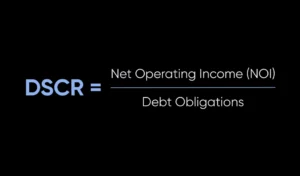
Formula (what is a DSCR loan →):
- Rental Income = market rent from appraisal (Form 1007) or 12-month rental history
- PITIA = principal + interest + property taxes + insurance + HOA dues
Houston-specific note: Property taxes in Houston (Harris County and surrounding) run 1.82–2.17% of assessed value annually. Investment properties do not qualify for the homestead exemption. At Houston’s entry price points, this is still more manageable than Austin — a $300,000 property at 2.0% runs $500/month in taxes vs. $700/month on a $420,000 Austin property. But always calculate PITIA with actual tax rates.
Use our DSCR loan calculator → to run your Houston scenario.
Why Houston Is Texas’s Best DSCR Market
Houston’s investment thesis is built on three pillars that no other major Texas market can match simultaneously:
1. Affordability — Lowest Entry Prices in Major Texas Metros
- Median SFR investment property: $261,700–$340,000
- Suburban communities (Katy, Pearland, Sugar Land, Cypress): $280,000–$380,000
- Compared to Austin ($499,000 median) and Dallas ($415,000+ in key suburbs)
- Lower entry = lower loan amount = lower PITIA = stronger DSCR
2. Rental Yields — Highest in Texas
- Gross rental yields: 6–8% in Houston vs. 5–7% in Dallas and 4–6% in Austin
- SFR average rent: $1,475–$1,600/month
- Suburban premium rents (Katy, Sugar Land school districts): $1,800–$2,400/month
- Rent growth projected 4–5% annually through 2026
3. Economic Diversification — Not Just Energy
Houston’s reputation as an oil and gas city undersells its actual economic profile. The city’s economy spans:
- Energy: ExxonMobil, Shell, ConocoPhillips, Halliburton — global headquarters
- Medical: Texas Medical Center — the largest medical complex in the world, 60+ institutions, 106,000+ employees
- Aerospace: NASA Johnson Space Center, Boeing, Lockheed Martin
- Port: Port of Houston — #1 U.S. port by foreign tonnage, driving logistics and trade employment
- Technology: Growing tech sector as California and Austin tech workers discover Houston’s affordability
This diversification is what makes Houston’s rental demand structural — not dependent on a single industry cycle.
Among major U.S. cities, Houston consistently produces some of the highest DSCR ratios for long-term rentals — driven by its unique combination of affordability, yield, and diversified tenant demand.
The DSCR math that doesn’t lie: A $300,000 Houston rental property at $1,600/month rent produces a DSCR of approximately 1.15x–1.25x at current rates. The same math in Austin at $499,000 and $2,000/month rent produces a DSCR of 0.77x. That is the Houston advantage in a single comparison.
Data compiled from Texas Real Estate Research Center, U.S. Census Bureau, Texas Medical Center, Port of Houston Authority, and local market reports (2026). Always underwrite to current figures.
No hard credit pull. 24-hour quote turnaround.
Houston DSCR Loan Requirements at Defy
| Requirement | Defy Mortgage |
|---|---|
| Minimum DSCR | 0.75 |
| Maximum LTV (Purchase SFR) | 85% |
| Maximum LTV (Cash-Out Refi) | 80% |
| Minimum Credit Score | 640 |
| Maximum Loan Amount | No maximum |
| Income Documentation | None required |
| Tax Returns Required | No |
| W-2s Required | No |
| LLC Borrowing | Yes |
| Closing Timeline | 14–21 days |
| STR Eligible | Yes — in compliant zones |
Houston Neighborhoods for DSCR Loan Investments
Top Cash Flow Submarkets
Katy (77449, 77450, 77494)
Consistently ranked among the best Houston suburbs for real estate investment. Top-rated Katy ISD school district drives premium family rental demand. Entry prices $300,000–$420,000, rents $1,800–$2,400/month. DSCR ratios frequently hit 1.20x–1.30x. Best fit for investors targeting family tenants with long-term lease stability.
Pearland (77581, 77584)
South of Houston, fast-growing suburb with strong medical professional tenant demand (proximity to Texas Medical Center). Entry prices $280,000–$380,000, rents $1,600–$2,100/month. Low vacancy, creditworthy tenants. Best fit for long-term rental investors seeking stable, professional tenants.
Sugar Land (77478, 77479)
Fort Bend County’s premier suburb. Higher-income tenants, Fortune 500 employer proximity, excellent infrastructure. Entry prices $350,000–$500,000, premium rents. DSCR tighter than Katy or Pearland but tenant quality and vacancy among the best in the metro. Best fit for investors prioritizing tenant quality over raw yield.
Cypress / Tomball (northwest metro)
Rapidly growing northwest corridor. Newer construction, strong school districts, expanding employer base. Entry prices $280,000–$400,000. Best fit for investors buying new or near-new construction with lower maintenance risk.
Urban and Appreciation Markets
Midtown / Montrose / Heights
Urban core Houston — walkable, culturally rich, strong STR and mid-term rental demand. Higher entry prices ($400,000–$650,000) but premium rents and appreciation. Best fit for investors holding long-term or pursuing STR where permitted.
Museum District / Medical Center Area
Proximity to Texas Medical Center creates exceptional demand from medical professionals, residents, and researchers. Premium rents, low vacancy, creditworthy tenants. Entry prices elevated but tenant profile exceptional. Best fit for investors targeting medical professional tenants.
Energy Corridor (77079)
ExxonMobil, Shell, ConocoPhillips proximity. Corporate relocation tenants on company leases. Premium rents, near-zero vacancy during energy sector stability. Entry prices $300,000–$450,000. Best fit for investors comfortable with energy sector exposure.
Workforce / High Yield Markets
Northeast Houston / Humble / Atascocita
Lower entry prices ($200,000–$300,000), strong rental demand from port and logistics workers, highest gross yields in the metro (7–9%). Best fit for experienced investors prioritizing maximum cash-on-cash return.
DSCR Calculation Example — Houston Rental Property
Scenario: Long-term rental in Katy / suburban Houston
- Purchase price: $320,000
- Down payment (20%): $64,000
- Loan amount: $256,000
- Rate: Illustrative market rate, 30-year fixed
- Monthly P&I: $1,703
- Property taxes (est.): $533/month (~2.0% effective rate, Harris County investment property)
- Insurance (est.): $130/month
- HOA: $0 (SFR)
- Total PITIA: $2,366/month
- Market rent: $1,800/month
- DSCR = $1,800 ÷ $2,366 = 0.76 ✅ (qualifies at Defy’s 0.75 minimum)
Higher-performing scenario — Katy premium:
- Purchase: $360,000 / Loan: $288,000
- Rate: illustrative market assumption / P&I: $1,916
- Taxes: $600/mo / Insurance: $140/mo
- Total PITIA: $2,656/month
- Market rent: $2,200/month
- DSCR = $2,200 ÷ $2,656 = 0.83 ✅
DSCR Sensitivity to Property Tax Rate — $320,000 Purchase, $256,000 Loan, $1,800 Rent
| Tax Rate | Monthly Taxes | Total PITIA | DSCR |
|---|---|---|---|
| 1.82% | $486 | $2,319 | 0.78 ✅ |
| 2.00% | $533 | $2,366 | 0.76 ✅ |
| 2.17% | $579 | $2,412 | 0.75 ✅ |
Houston property taxes are high but the lower entry prices relative to Austin keep PITIA more manageable. Always use actual assessed value and tax rate.
The Houston Economy — Why Rental Demand Is Structural
Houston’s rental demand is not cyclical — it is structural. The city has four independent demand engines operating simultaneously:
Texas Medical Center — the largest medical complex in the world. 60+ institutions including MD Anderson Cancer Center, Memorial Hermann, Houston Methodist, and Baylor College of Medicine. 106,000+ employees generating consistent demand from medical professionals, residents, researchers, and support staff who rent near the complex.
Energy Sector — ExxonMobil, Shell, ConocoPhillips, Halliburton, and BP all maintain major Houston operations. Corporate relocation packages and rotational assignments create sustained demand for premium suburban rentals.
Port of Houston — the #1 U.S. port by foreign tonnage. Tens of thousands of logistics, trade, and port operations employees. Creates workforce rental demand in northeast and east Houston.
NASA Johnson Space Center — aerospace and defense corridor in southeast Houston (Clear Lake, Webster, League City). Boeing, Lockheed Martin, and hundreds of aerospace contractors. STEM professionals earning $80,000–$150,000+ — premium long-term tenants.
The result: Houston has one of the most diverse tenant pools of any major U.S. metro — from medical professionals in the Medical Center area to energy executives in the Energy Corridor to aerospace engineers in Clear Lake. No single industry downturn eliminates demand.
Who DSCR Loans Work Best For in Houston
Cash flow investors — investors whose primary metric is positive monthly cash flow from day one. Houston’s combination of low entry prices and strong rental yields makes it the strongest cash flow market in major Texas metros.
BRRRR investors — Buy, Rehab, Rent, Refinance, Repeat. Houston has significant inventory of value-add properties that can be acquired below market, renovated, and refinanced via DSCR cash-out. The affordability and rental demand make the BRRRR cycle work better here than in Austin or Dallas.
Portfolio builders — no limit on financed properties. Investors scaling to 5, 10, or 20+ properties find Houston’s affordability allows larger portfolios at the same capital base.
Self-employed investors — DSCR ignores tax returns entirely. Houston’s large entrepreneurial and energy industry self-employed population makes this particularly relevant.
LLC investors — borrow in your LLC name for asset protection.
Who this is NOT for:
- Investors primarily motivated by short-term appreciation — Houston appreciates steadily but not explosively like Austin did at peak
- Buyers in energy-dependent submarkets (Energy Corridor) without understanding of energy sector cyclicality
- W-2 borrowers who qualify easily for conventional loans
Pros and Cons of DSCR Loans in Houston
Pros:
- No personal income verification
- No tax returns or W-2s required
- Strongest DSCR ratios in major Texas metros (1.15x–1.30x common in suburbs)
- Lowest entry prices of major Texas markets
- Highest gross rental yields in Texas (6–8%)
- Four independent demand engines — structural, not cyclical
- No Texas state income tax
- LLC borrowing allowed
- No limit on financed properties
- 14–21 day closings
Cons:
- Property taxes 1.82–2.17% — must use actual rates in PITIA
- Appreciation more moderate than Austin — primarily a cash flow, not appreciation, market
- Energy Corridor submarket has energy sector cyclicality exposure
- Some northeast/east Houston submarkets require experienced management
- Rates above conventional investment loan rates
Houston DSCR Loan Rates
Defy doesn’t publish a single Houston number, because pricing moves with credit, leverage and property type. Start with today’s DSCR loan rates, then check DSCR loan rates by FICO tier to see where a 640, 680 or 720 file actually lands.
Licensing
Texas is DSCR-eligible with Defy, part of our 38-state DSCR lending footprint for business-purpose investment property loans. See the full list on our state licensing page.
Houston DSCR Rate Scenarios by FICO Tier
| Scenario | Pricing |
|---|---|
| 740+ FICO, 75% LTV, DSCR ≥ 1.0 | ~Matrix-priced |
| 720 FICO, 80% LTV, DSCR ≥ 1.0 | ~Matrix-priced |
| 680 FICO, 75% LTV, DSCR ≥ 1.0 | ~Matrix-priced |
| Any scenario, DSCR 0.75–0.99 | Rate premium applies |
⚠️ Rates change daily — these are approximate indications for April 2026 only.
See current Non-QM rates → for full breakdown by product and LTV tier.
DSCR Loans vs. Conventional Investment Property Loans
| Feature | DSCR Loan | Conventional | Best Choice |
|---|---|---|---|
| Income Verification | Rental income only | Personal income required | Investors → DSCR |
| DTI Consideration | Not used | Required | Self-employed → DSCR |
| Tax Returns | Not required | Required | Complex income → DSCR |
| Property Limit | No limit | Typically 6–10 | Portfolio builders → DSCR |
| LLC Borrowing | Yes | Rarely | Asset protection → DSCR |
| Closing Speed | 14–21 days | 30–45 days | Competitive deals → DSCR |
Houston vs. Other Texas and Southeast DSCR Markets
| Market | Profile | Unique Angle | Gross Yield |
|---|---|---|---|
| Houston, TX | Cash flow capital | Lowest entry, highest yields, 4 demand engines | 6–8% |
| Austin, TX | Tech correction play | Softened prices, high-income tech tenants | 4–6% |
| Dallas, TX | Corporate relocation scale | #1 PwC/ULI ranked, 100+ HQ relocations | 5–7% |
| Nashville, TN | Music city appreciation | Healthcare + tech diversification | 5–6% |
| Tampa, FL | Gulf Coast appreciation | Insurance caution required | 5–7% |
| Raleigh, NC | Research Triangle growth | 3 Tier 1 universities | 5–6% |
Is Houston Better for DSCR Than Other Texas Markets?
Houston is better for:
- Raw cash flow — lowest entry prices and highest yields of any major Texas metro
- DSCR ratio performance — suburban properties hitting 1.15x–1.30x vs. 0.75–0.90x in Austin
- Economic diversification — four independent demand engines vs. Austin’s tech concentration
- Portfolio scaling — lower per-property cost allows more properties at same capital base
- BRRRR strategy — value-add inventory and strong rental demand make the cycle work
Houston is worse for:
- Short-term appreciation — moderate price growth vs. Austin’s historical run-up
- Lifestyle premium — Austin and Dallas command premium rents from lifestyle-driven tenants
- Energy Corridor risk — corporate relocation demand tied to energy sector cycles
Bottom line: Houston is the best DSCR market in Texas for investors who run the numbers first. Houston is where DSCR math works without assumptions — if the question is “does this property cash flow on day one,” Houston answers yes more often than any other major Texas metro.
What DSCR Deals Are Actually Closing in Houston Right Now
Based on current underwriting across active Houston metro scenarios. These are real underwriting observations — not projections.
- DSCR range: 1.0–1.25x most common — Houston is one of the few major metros where DSCR loans regularly close above 1.0x on long-term rent alone
- LTV: 75–80% most common — 85% LTV available for 740+ FICO
- Property types: SFR dominant in suburbs; small multifamily (2–4 units) strong in urban core
- Best-performing submarkets: Katy, Pearland, and Cypress outperforming for DSCR ratios; northeast Houston outperforming for raw yield
- Toughest scenarios: Energy Corridor properties mid-cycle and older frame construction with elevated insurance
- Recent trend (last 30–60 days): Suburban SFR in Katy and Pearland closing most efficiently — clean DSCR ratios, fast appraisals, minimal underwriting friction
Why Investors Trust Defy for Houston DSCR Loans
- Direct lender — no broker middleman, no extra pricing layer
- 0.75 minimum DSCR — though Houston rarely needs it; most deals close above 1.0x
- Non-QM specialists — DSCR is Defy’s core product
- 14–21 day closings — faster than conventional investment loans
- No loan maximum — scales with your portfolio
- Licensed across 30+ states including Texas
Defy Mortgage is a direct Non-QM lender founded in 2023 and headquartered in Nashville, TN.
Houston Flood Zones and Insurance — What DSCR Investors Must Know
Houston’s flood risk is the one underwriting variable that separates informed investors from those who get surprised. It is real, it is manageable, and it must be factored into every DSCR calculation.
FEMA Flood Zones: Houston has properties across multiple FEMA flood zone designations. Zone X (minimal flood hazard) covers most suburban markets — Katy, Pearland, Cypress, Sugar Land. Zones AE and A (100-year floodplain) exist in lower-lying areas, particularly near bayous and in older inner-loop neighborhoods. Always verify the flood zone designation for any specific property before contracting — FEMA’s Flood Map Service Center provides this by address.
Flood Insurance Impact on DSCR: Properties in high-risk flood zones (Zone AE or A) require flood insurance, which is separate from your standard hazard insurance policy. Flood insurance through the National Flood Insurance Program (NFIP) runs $1,000–$3,000+/year depending on the property’s elevation and coverage amount. This adds $83–$250+/month to PITIA and directly compresses your DSCR. A deal that works without flood insurance may not work with it — always get a flood insurance quote before underwriting.
Why Suburban Markets Are Preferred: Katy, Cypress, Pearland, and Sugar Land have invested heavily in drainage infrastructure following major flood events. Many newer construction subdivisions in these areas sit in Zone X and carry minimal flood risk. This is a primary reason experienced Houston investors favor these suburbs over older inner-loop properties — not just for flood risk management, but for insurance cost control and DSCR preservation.
Defy’s underwriting position: Flood insurance is included in PITIA for all properties in required flood zones. We underwrite to actual insurance costs — not estimates. Get actual quotes from a Houston insurance broker before submitting your deal.
Frequently Asked Questions
What is a DSCR loan in Houston, TX?
A DSCR loan in Houston qualifies based on rental income rather than personal income. No W-2s or tax returns required. Houston’s affordability and strong rental yields produce some of the best DSCR ratios of any major U.S. market.
What DSCR ratios are typical for Houston investment properties?
Suburban Houston properties in Katy, Pearland, and Cypress consistently produce DSCR ratios of 1.15x–1.30x at current prices and rates — among the strongest in major Texas metros.
Are property taxes high in Houston?
Yes — 1.82–2.17% effective rate on investment properties (no homestead exemption). At Houston’s lower entry prices, the dollar impact is lower than Austin, but always calculate PITIA with actual tax rates.
What neighborhoods produce the best DSCR in Houston?
Katy, Pearland, Sugar Land, and Cypress consistently produce the strongest DSCR ratios. Northeast Houston and Humble produce the highest gross yields. The Energy Corridor and Medical Center area produce the most creditworthy tenants.
Can I use a DSCR loan for a Houston Airbnb?
Yes, in compliant zones. Houston has fewer STR restrictions than Austin — verify at the address level and with the city/county. Defy underwrites to long-term market rent regardless of STR strategy.
What is the minimum credit score for a Houston DSCR loan?
640 minimum FICO at Defy. 720+ unlocks best rates and highest LTV.
How much down payment is required?
Typically 20–25%. Defy goes to 85% LTV (15% down) for qualifying SFR purchases with 740+ FICO and DSCR of 1.0 or better.
Is Houston a good market for DSCR investment in 2026?
Yes — Houston is the strongest cash flow DSCR market in major Texas metros. Affordable entry prices, 6–8% rental yields, four independent demand engines, and suburban DSCR ratios of 1.15x–1.30x make it the most favorable market in Texas for investors running the numbers.
Does Defy lend throughout the Houston metro?
Yes — including Katy, Sugar Land, Pearland, Cypress, The Woodlands, Humble, Baytown, League City, and all of Harris, Fort Bend, Montgomery, Brazoria, and Galveston counties.
Why are DSCR ratios higher in Houston than other Texas cities?
Three reasons work together. First, Houston’s entry prices are lower — a $320,000 Houston property carries less monthly principal and interest than a $499,000 Austin property. Second, Houston’s rents are competitive relative to purchase prices — the rent-to-price ratio is stronger than Austin or Dallas. Third, Houston’s four economic demand engines sustain rental demand across multiple tenant types, reducing vacancy risk. The combination of lower PITIA and consistent rental income produces DSCR ratios that regularly exceed 1.0x — something Austin rarely achieves on long-term rent alone.
How fast can Defy close a Houston DSCR loan?
14–21 days for qualifying scenarios with complete documentation.
Written by Ashley Heesch, Head of Marketing at Defy Mortgage. Ashley brings 8 years of marketing experience to making non-QM lending accessible and clear for investors and self-employed borrowers.
This content is for informational purposes only and does not constitute a loan commitment or guarantee of financing. All loan scenarios are subject to credit approval, appraisal, underwriting review, and program eligibility. Rates, guidelines, and market data referenced are subject to change without notice.
Ready to finance your next Houston investment property?
Get your Houston DSCR quote in 24 hours. Close in as little as 14 days. No credit pull required for your initial quote.
📞 (615) 622-1032
Get Your Houston DSCR Quote in 24 Hours →
No hard credit pull. 24-hour quote turnaround.